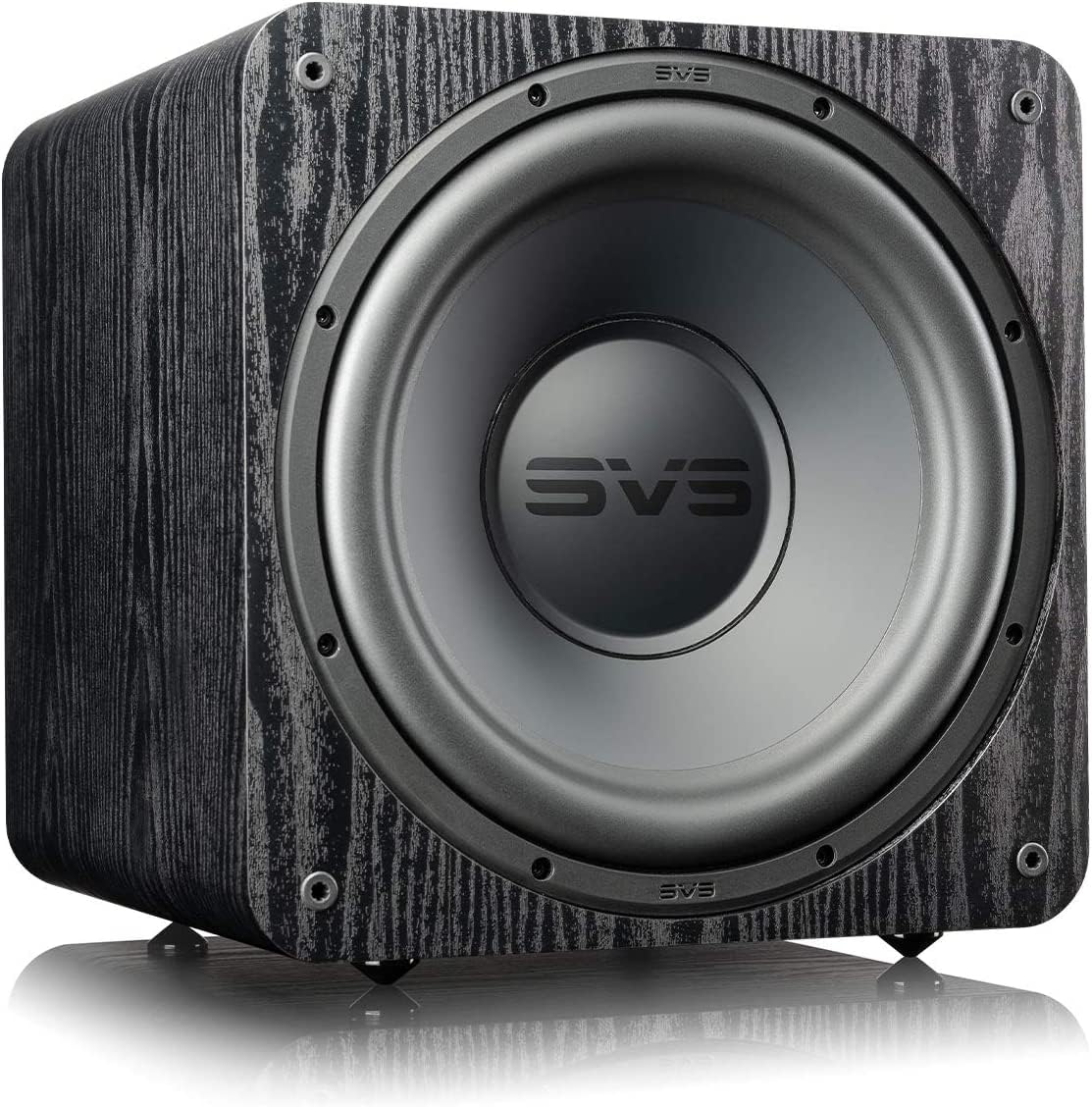
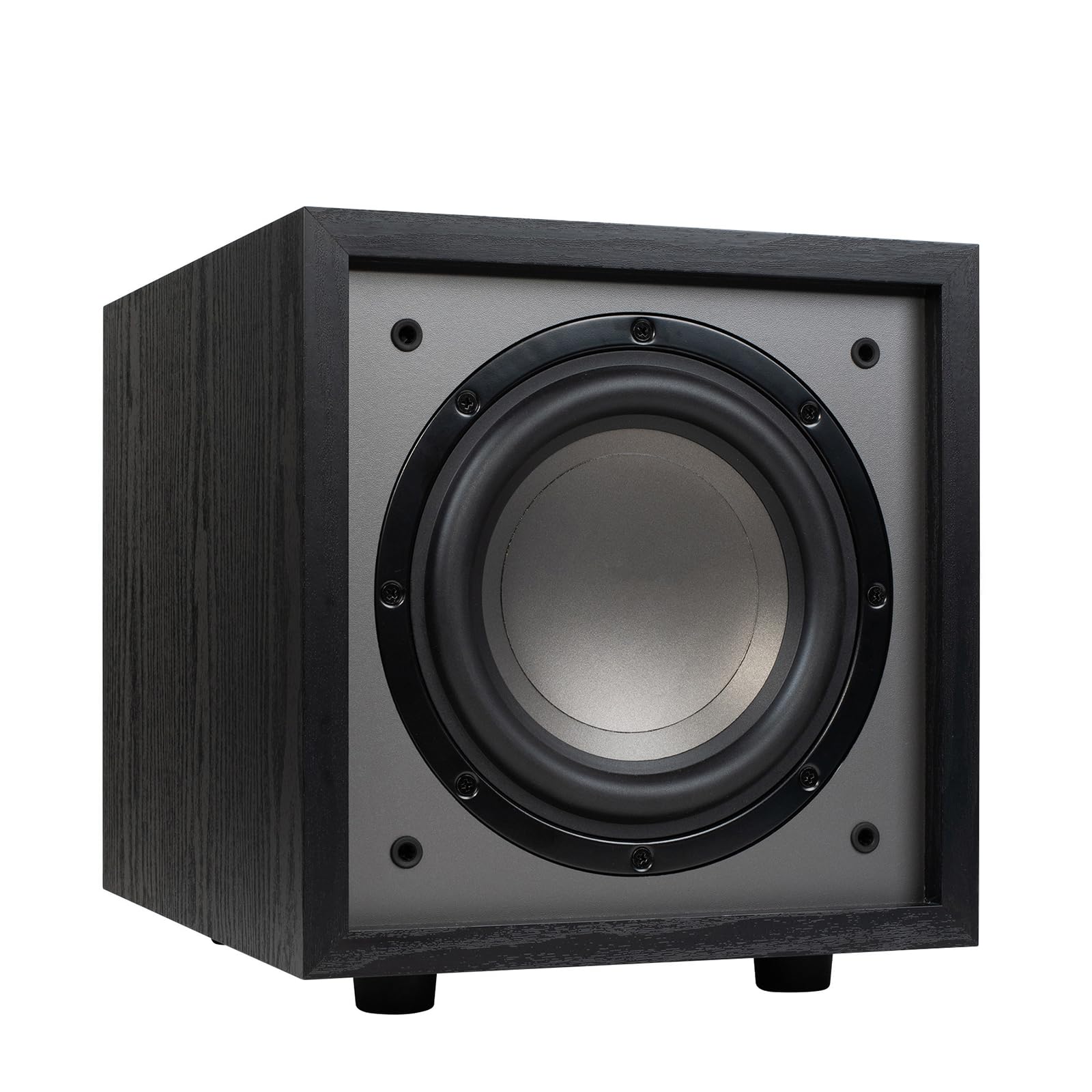
Best Overall Home Theater Subwoofer

Klipsch R-12SW
Key details
- Amplifier Power
- 400W dynamic
- Driver & Cabinet
- 12-inch front-firing ported
- Inputs & Controls
- Line/LFE, crossover, phase
- Frequency Response
- 29Hz extension
A 12-inch copper-spun woofer driven by a 400W dynamic amplifier gives the R-12SW a low-end authority that compact subs cannot reach. The 29Hz extension adds physical weight to movie LFE effects, and the front-firing driver keeps kick drums and synth bass from blurring into a single thump. This is the kind of output that fills a room with pressure rather than just sound. This is not background fill; it is audible and physical across an entire seating area.
The cabinet looks and feels like it costs more than the asking price. The black polymer veneer has a consistent texture that fits typical AV furniture, and the driver orientation simplifies placement compared with down-firing subs. Low-pass crossover, phase switch, and auto power are laid out for simple receiver integration, while the line/LFE input handles both AV receivers and powered speaker systems. The phase switch is useful in rooms where the sub sits far from the main speakers.
Output scales with room size. In a medium-to-large living room the R-12SW stays composed at moderate volume; pushed harder, it delivers deep and physical bass. This behavior makes room matching more important than a glance at wattage ratings would suggest.
Dynamic headroom matters more than peak wattage on paper. The amplifier holds the woofer together during sustained low-frequency effects, so high-volume playback stays physical rather than strained. There is enough reserve for action-movie scenes that keep a constant low end for minutes at a time.
On music, the R-12SW adds weight without masking vocals or midrange. It handles acoustic and electronic material with the same composure, so the sub does not demand a separate music setup.
This is a value pick for home-theater and music buyers who want a 12-inch sub's output in a medium-to-large room. It pairs with a standard receiver's LFE channel and suits systems where the sub has a dedicated spot. High-end listeners chasing maximum refinement should look to sealed premium designs, where control beats raw weight. The value case is simple: this combination of output and build is rare at a mid-range price. Nearfield desktop use is not the target; this sub needs open air to develop its low end.
💡 Start with the low-pass crossover near 80Hz and test the phase switch to see which position blends best with your front speakers.
Pros
- Delivers loud, tactile bass that shakes walls in medium-to-large rooms.
- Strong output per dollar for a 12-inch subwoofer.
- Cabinet finish and driver build feel above the price.
- Handles both movie effects and music with controlled low end.
Cons
- Large ported cabinet requires substantial floor space and can overwhelm a compact room's bass response.
For medium-to-large rooms, this is the low-end anchor that makes a standard receiver feel complete.