10 Best USB Audio Mixer of 2026: Picks With USB That Actually Works

Find the best USB audio mixer for your setup -- one with usable recording levels, the right preamp count, and no stereo-only USB surprises.

Most so-called USB mixers treat the USB port as an afterthought. You plug in expecting a clean multi-track recording, only to find a low output level, a stereo-only mix, or a driver conflict with your DAW. The mixer itself may sound fine; the USB side decides whether it earns a permanent spot on your desk.

Choosing the right one comes down to how you actually record. A podcast host with remote guests needs different I/O than a band tracking a rehearsal, and a streamer with one XLR mic needs less than a 16-preamp console. Match the USB mode to your workflow, and the mixer becomes a simple part of the signal chain.

Multi-track capture requires a mixer that explicitly sends individual channels over USB; stereo mixers are fine for streaming, but do not let every mic be edited separately. Confirm that detail before you buy, because it changes which preamp layout makes sense.

About the Sound Score: This comparative score is calculated from a product's published customer rating and review volume. It is not a laboratory measurement or a hands-on test result.

1

Best Overall

Yamaha MG10XU

92 /100
Sound Score Outstanding

Key details

Form Factor
10-input tabletop
Mic Preamps
D-PRE class A preamps
USB Recording
2-in/2-out USB
Controls & Routing
3-band EQ, SPX effects
View on Amazon

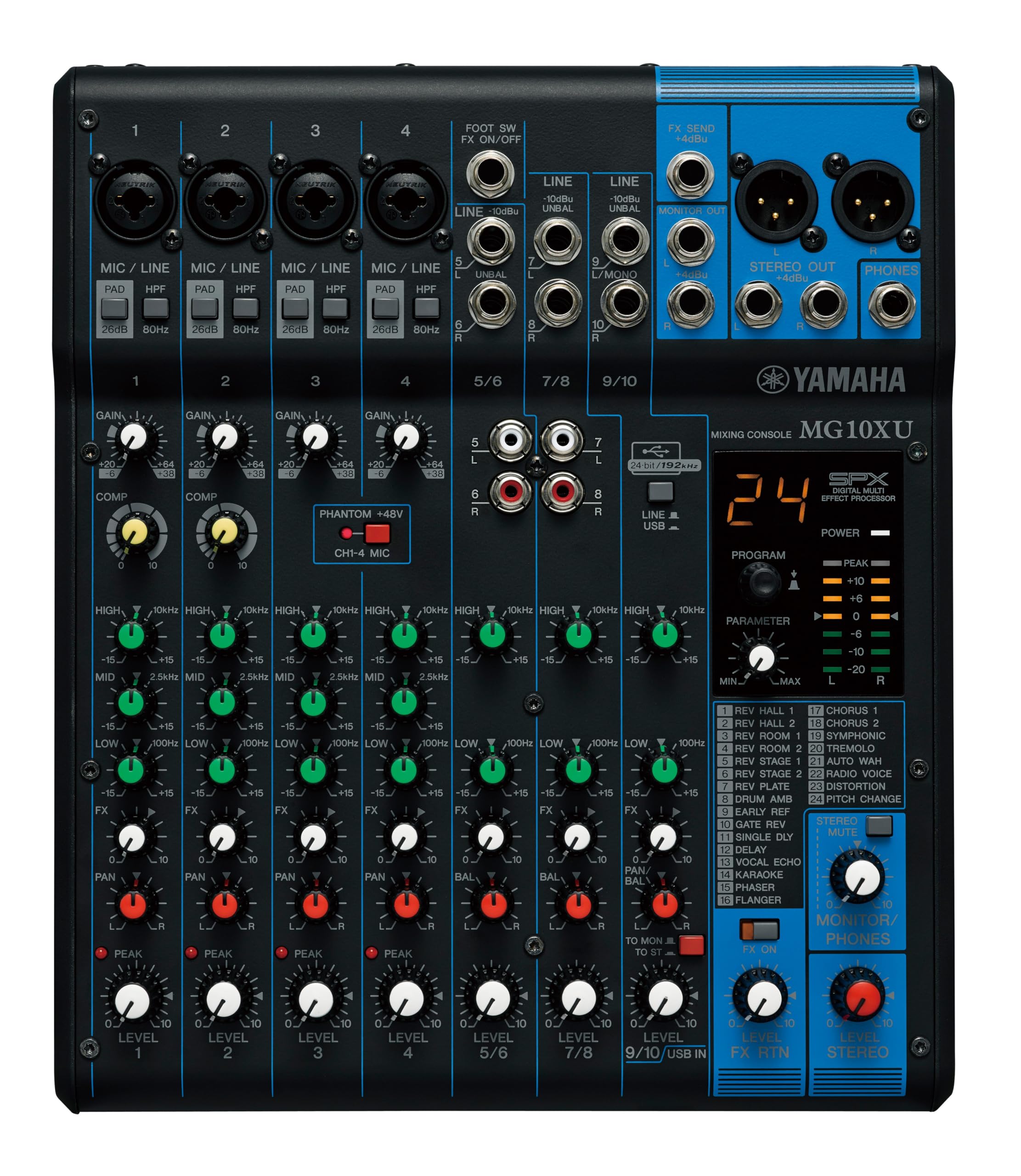
The Yamaha MG10XU is a 10-input analog mixer with D-PRE preamps, 3-band EQ, and SPX effects for home studios and small bands. The controls are laid out so you can shape a source quickly: high-pass filter, EQ, and effects on each channel, with a stereo return for keys or a drum machine. The preamps deliver usable gain on dynamic mics without the brittle edge that can show up in this class.

SPX effects are practical for vocals, guitar, and keys, and the 3-band EQ with high-pass filters helps clean up problem frequencies before the mix hits the outputs. The analog design means you can run a show without a computer connected, and the preamps keep their composure when you push them.

This mixer is right for podcasters who also mix music or multiple instruments, and for small bands or acoustic gigs that need one box for live sound and rough recordings. The USB output level can be lower than expected, and a subtle 60 Hz hum can appear in quiet gain settings; gain staging may be required for clean computer recordings.

Pros

  • D-PRE preamps and 3-band EQ keep vocals and acoustic sources clean through the mix.
  • Ten-input layout handles home studio, band rehearsal, and live acoustic sets without external processors.
  • SPX effects and high-pass filters are quick to set, so live monitoring and recording can share one setup.

Cons

  • USB capture carries the stereo main mix only; multi-track tracking requires a different interface.
  • Every performer shares the same headphone monitor mix, so separate cues for recording guests are unavailable.
Our verdict

The MG10XU puts clean preamps, usable effects, and a stereo USB path into one analog box for live sound and computer capture.

Check Latest Price
2

Best for Podcasters

Zoom PodTrak P4

93 /100
Sound Score Outstanding

Key details

Form Factor
Battery-powered, portable
Mic Preamps
4 XLR, phantom power
USB Recording
2-in/2-out USB
Controls & Routing
Sound Pads, phone input
View on Amazon

Four XLR mic inputs, four independent headphone mixes, and a built-in phone connection with mix-minus cover podcast scenarios that a standard analog mixer leaves to extra gear. It also records multi-track straight to SD and acts as a 2-in/2-out USB audio interface for streaming or computer recording.

This fits podcasters and remote interviewers who need multiple mics, call-ins, and location recording without a laptop. Power management matters more than on a typical analog mixer: long sessions with phantom-powered condenser mics are best run from AC or rechargeable power. This is not the mixer for line-heavy band inputs.

Pros

  • Clean preamps keep multi-mic podcast recordings free of audible hiss and noise.
  • Close to plug-and-play: connect mics, assign tracks, and start recording.
  • Strong value for a four-mic recorder with call-in and SD recording.

Cons

  • Under certain SD-card or power conditions, recording can stop before you expect it.
Our verdict

For podcasters and remote interviewers who need four XLR mics, call-in mix-minus, and a USB feed to a computer, the PodTrak P4 delivers the core studio workflow in a portable package.

Check Latest Price
3

Best for Live / Bands

Behringer XR18

92 /100
Sound Score Outstanding

Key details

Form Factor
Rack-mountable, 18-input
Mic Preamps
16 Midas preamps, phantom
USB Recording
18x18 USB interface
Controls & Routing
6 aux buses, tablet control
View on Amazon

Sixteen Midas preamps feed an 18-input mix engine with six aux buses, mains, subgroups, and Dugan-style automixing, all programmed from an iPad or Android tablet. The 18x18 USB interface records every channel individually, a capability beyond the compact Bluetooth mixer in this lineup. Rack-mount design suits portable and installed setups alike.

Bands, houses of worship, and venue installs get full console-level routing in a rack unit without a large footprint. For live work, the built-in Wi-Fi access point may drop in congested RF environments, so an external router is the standard fix; QC variance also makes a bench test before the first gig worthwhile.

💡 Use an external router with the XR18 for wireless control in venues.

Pros

  • 16 Midas preamps deliver clean gain for a full band's input list.
  • 18x18 USB audio records all channels individually for post-show mixing or broadcast.
  • Full digital mixer feature set at a price that undercuts comparable analog-plus-outboard rigs.

Cons

  • Built-in Wi-Fi access point can drop in crowded venues.
  • Some units may arrive without signal or develop faults early on.
Our verdict

If the analog immediacy of the top pick isn't required, the XR18's combination of Midas preamps, deep routing, and 18x18 capture makes it the practical digital alternative.

Check Latest Price
4

Best Compact Digital

Behringer FLOW 8

92 /100
Sound Score Outstanding

Key details

Form Factor
Compact tabletop
Mic Preamps
2 Midas preamps, phantom
USB Recording
USB audio interface
Controls & Routing
60 mm faders, EZ-Gain
View on Amazon

The FLOW 8 is an 8-input digital mixer with a USB audio interface, 60 mm faders, and EZ-Gain in a compact frame. The phone app handles EQ, effects, and level adjustments, while Bluetooth sends music or backing tracks into the mix without a cable.

It fits solo performers, mobile DJs, and podcasters or streamers running one or two mics who want app-based control and simple computer recording. Occasional audio shutdowns or glitches and one-device-at-a-time Bluetooth pairing are the tradeoffs; live sets that cannot accept them are better served by an analog or rack digital mixer.

Pros

  • Compact, well-built chassis with 60 mm faders and EZ-Gain leveling.
  • Clean sound and usable internal effects for its price class.
  • Bluetooth streaming plus phone-app control simplifies setup and adjustments.

Cons

  • Only two XLR mic preamps, so multi-mic roundtables and full bands outgrow it quickly.
Our verdict

The FLOW 8 is a cost-effective USB mixer for solo performers, podcasters with one or two mics, and mobile DJs who want app control without hauling a rack.

Check Latest Price
5

Best Budget Streaming Mixer

FIFINE SC3 AmpliGame

89 /100
Sound Score Excellent

Key details

Form Factor
Compact desktop
Mic Preamps
1 XLR input, phantom
USB Recording
USB-C plug-and-play
Controls & Routing
Faders, mute, sound pads
View on Amazon

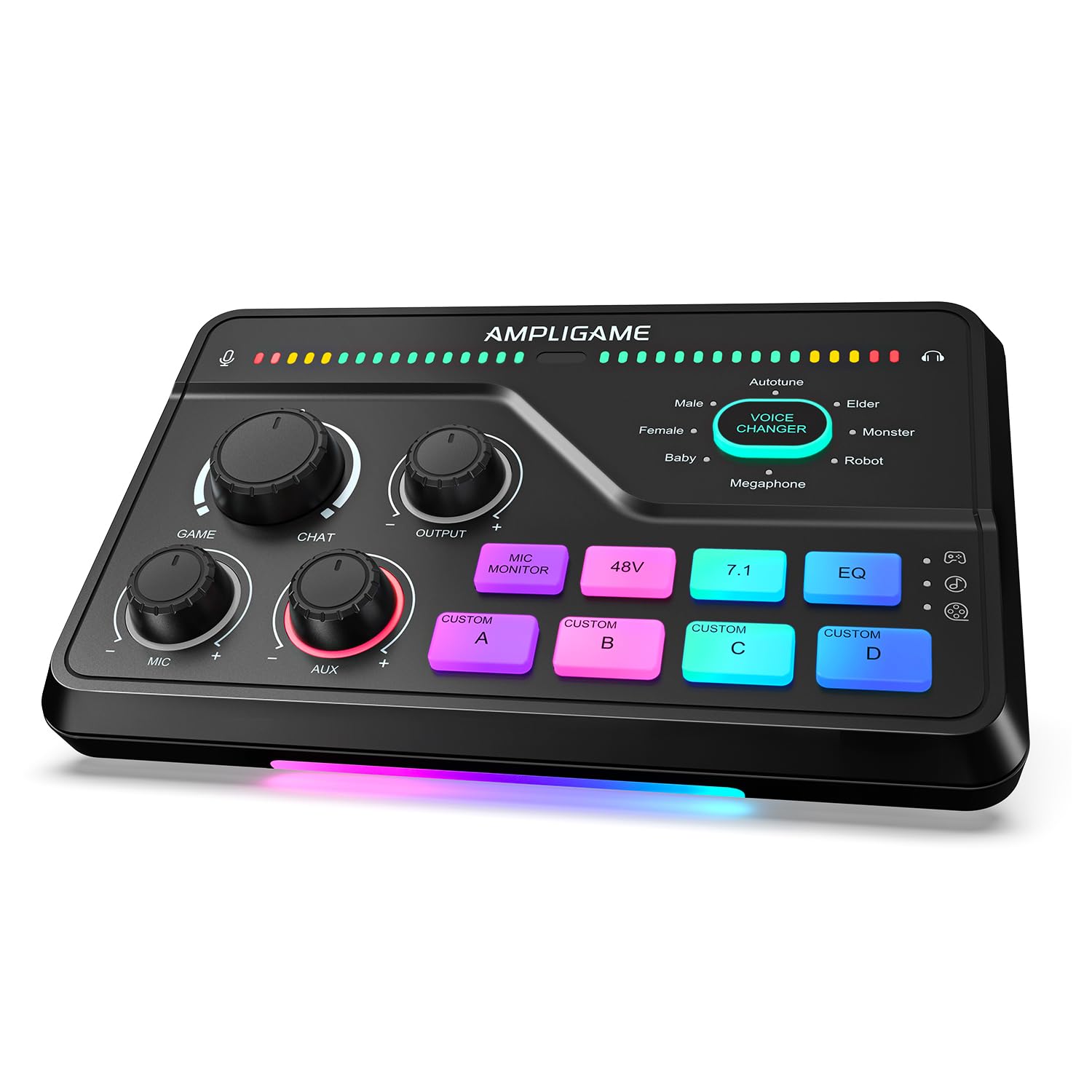
The SC3 is a low-cost USB-C mixer that puts XLR input, 48V phantom power, four sound pads, a voice changer, and RGB into one desktop box. Four channel faders give separate level control for each input source. It is tuned for game streams rather than the broader analog mixers in this roundup, so the built-in effects cover the voice-processing duties that software would handle.

That single-XLR design suits beginner streamers and gamers moving from a USB mic into XLR territory. Quiet streams can pick up a low-level hiss, output level runs below typical interfaces, and no XLR cable is included — all acceptable when entry cost and built-in voice play are the priority.

Pros

  • Entry-level XLR streaming setup with 48V phantom power at a budget price.
  • Beginner-friendly controls support daily streaming use without extra setup.
  • Voice changer and four sound pads add entertainment without extra software.

Cons

  • Output can run below typical interface levels, and no XLR cable is included.
  • Quiet streams can pick up a low-level hiss under the mix.
Our verdict

Best for solo streamers who want a low-cost path from USB mics to XLR and value playful effects over pristine audio.

Check Latest Price
7

Budget Multi-Mic

Pyle PMXU83BT

86 /100
Sound Score Excellent

Key details

Form Factor
Rugged steel chassis
Mic Preamps
XLR/line inputs, phantom
USB Recording
USB audio interface
Controls & Routing
EQ, FX, Bluetooth
View on Amazon

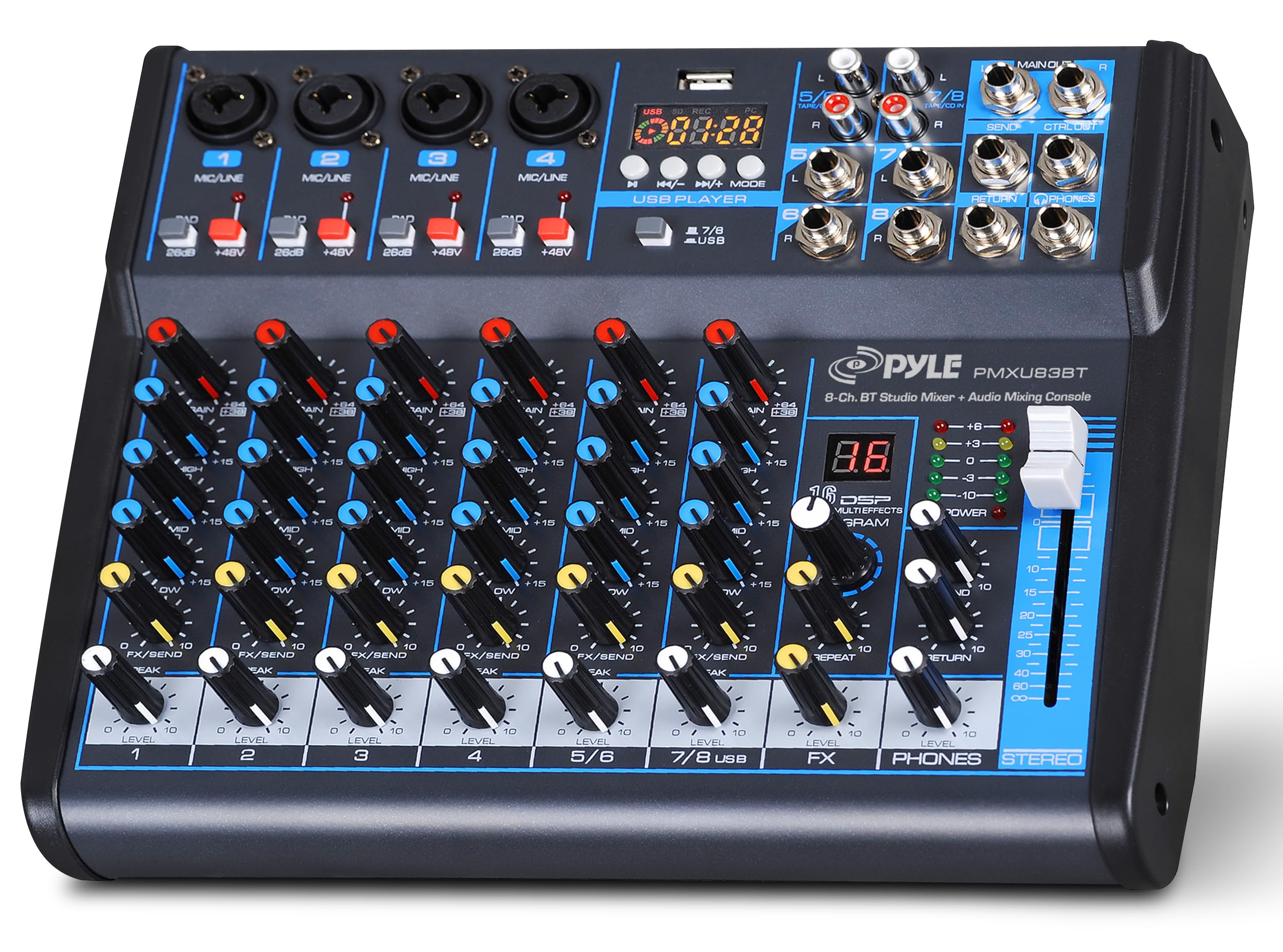
The Pyle PMXU83BT is a budget-friendly 8-channel analog mixer with Bluetooth, USB audio, FX, and 48V phantom power. Small venues and multi-host podcasts get more inputs per dollar than slimmer Bluetooth mixers. It's less polished than cleaner digital options: the manual is thin, some controls are unintuitive, and occasional units may arrive with power or input pickup issues.

Pros

  • Eight XLR/line channels with phantom power handle multi-host mics and live mic setups from one budget mixer.
  • Bluetooth streaming, USB computer audio, and built-in FX pack a lot of mixer into a low-price package.

Cons

  • The manual is thin and some controls are not self-explanatory; plan for trial and error.
Our verdict

For small-venue sound and multi-host podcasts, the input count per dollar overshadows the rough edges.

Check Latest Price
8

PC Streamers

MAONO G1 Neo

86 /100
Sound Score Excellent

Key details

Form Factor
Compact desktop
Mic Preamps
1 XLR input, phantom
USB Recording
USB, phone input
Controls & Routing
Sound pads, voice effects
View on Amazon

This budget mixer gives PC streamers and TikTok creators a genuine XLR path plus four sound pads, voice effects, and RGB in one USB-C device, with Bluetooth and phone input for extra sources. PS5 support is inconsistent despite console claims, and stereo-input use can introduce buzzing or static.

Pros

  • XLR input with 48V phantom power lets you use a budget dynamic mic for streaming without an extra interface.
  • Four sound pads and voice effects bring live audio playfulness to streams without additional software.

Cons

  • Stereo input can carry an audible buzz or static in otherwise quiet recordings.
Our verdict

A good value for PC and TikTok streamers who want XLR, sound pads, and voice effects on a budget.

Check Latest Price
9

Console Gamers

FIFINE SC8

85 /100
Sound Score Excellent

Key details

Form Factor
Compact desktop
Mic Preamps
XLR input, phantom
USB Recording
USB-C, optical input
Controls & Routing
Game/chat balance, sound buttons
View on Amazon

The SC8 delivers clear positional audio for PC and console gaming, and XLR mic handling stays simple with 48V phantom power. Mac support is absent, there's no AUX output, and sensitive IEMs may expose a faint noise floor. Within its PC/console niche, the price is fair.

Pros

  • Crisp positional audio from virtual 7.1 keeps game footsteps and directional cues easy to track.
  • Plug-and-play on Windows and iPhone removes driver friction for quick setup.

Cons

  • A few voice-changer presets have little audible effect.
Our verdict

If you're on PC or console, need optical audio plus an XLR mic, and can skip voice effects, the SC8 covers that niche at a budget price.

Check Latest Price
10

Content Creators

Rode RodeCaster Duo

85 /100
Sound Score Excellent

Key details

Form Factor
Tabletop console
Mic Preamps
2 Neutrik combo preamps
USB Recording
USB-C interface
Controls & Routing
4 faders, 6 pads, touchscreen
View on Amazon

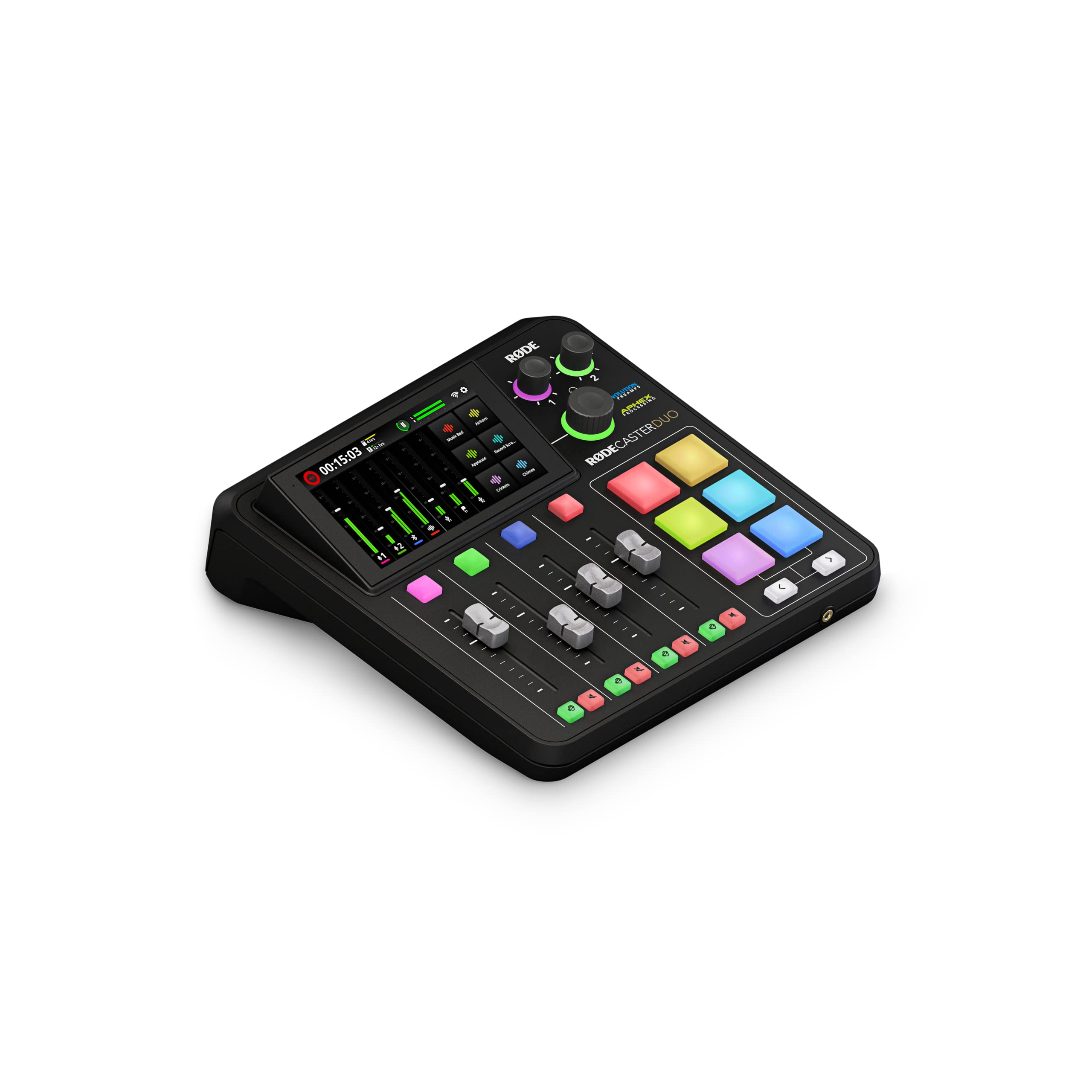
The RodeCaster Duo is a premium-priced integrated broadcast console for podcasters and streamers, with two Revolution preamps, four faders, six SMART pads, and APHEX effects in one desktop unit. Getting everything configured takes time, and power-on issues can occur. Those caveats hold it below the top slot despite a strong integrated concept.

Pros

  • Consolidates preamps, faders, pads, and effects into one compact desktop unit for podcast and stream workflows.
  • SMART pads and APHEX processing give soundboard-heavy creators a broad palette for live routines.

Cons

  • Headphone output can carry audible noise in quiet monitoring situations.
Our verdict

This fits podcasters and streamers who want consolidated, configurable desktop hardware and don't need a portable four-XLR recorder.

Check Latest Price
11

Band Rehearsals

Zoom LiveTrak L-12

86 /100
Sound Score Excellent

Key details

Form Factor
Tabletop, 12-input
Mic Preamps
12-input, phantom power
USB Recording
14-track USB interface
Controls & Routing
5 monitor mixes, effects
View on Amazon

Bands and mobile live recorders get five independent headphone mixes, low-noise preamps, and 14-track SD capture without a computer. The USB interface covers computer recording, but driver and DAW compatibility can be problematic with current macOS and Logic Pro, especially for DAW-centric buyers. Higher price and that caveat keep it just below the top pick.

Pros

  • Five headphone outputs with independent mixes let each player or podcaster set their own monitor blend during a session.
  • Records all 14 channels to SD at 24-bit/96kHz, so the band leaves with a usable multi-track file.

Cons

  • Driver and DAW compatibility can be problematic with current macOS and Logic Pro, so computer-centric buyers should verify support before committing.
Our verdict

Best for bands and mobile recorders that want multi-track SD capture without a laptop; computer-first buyers are better served by a more conventional USB mixer.

Check Latest Price

How to Choose

Mic Preamps and Phantom Power

Each XLR preamp channel adds the gain needed for a microphone and, on most mixers, a separate phantom-power circuit. The number of preamps sets an absolute limit on how many mics you can use at once, regardless of the total input count. Battery-powered mixers draw heavily when phantom power is switched on, so condenser mics can shorten runtimes dramatically.

Dynamic mics for podcasting are less power-hungry; a two-preamp mixer can be enough. For bands and multi-mic panels, count XLR inputs first and choose at least four usable preamps.

USB Recording Mode

Most mixers with a USB port send a stereo mix of the main output. That is fine for streaming and simple two-person podcasts, but it means every mic is permanently blended after the fact.

If you need to edit each person or instrument separately, the mixer must explicitly support multi-track USB audio or record to SD card.

Controls and Routing

Faders and EQ shape the sound before it reaches the USB output, so poor analog control design affects the recording itself. Effects are useful, but they also get baked into the recorded mix on most analog mixers.

Aux sends and monitor buses matter if performers need separate headphone mixes during a session. Channel count alone does not guarantee flexible routing; a 12-input mixer with one aux bus still cannot give each performer a separate mix.

Wireless and App Control

Bluetooth and Wi-Fi are convenience features, not pro-grade connectivity. Built-in access points can drop or introduce latency in crowded rooms, and Bluetooth pairing is often limited to one device at a time.

For critical live work, use a wired Ethernet router or keep a physical mixer within reach.

Portability and Form Factor

Compact mixers trade channel count and preamp space for a small footprint. Battery power makes a mixer grab-and-go, but phantom power drains batteries faster, and rack-mount digital consoles are not meant to be moved every day.

Choose the form factor that matches your typical venue, not the one that looks best on a desk.

Frequently Asked Questions