12 Best Audio Interface for Guitar 2026: Stable Drivers, Clean Gain

The best audio interface for guitar keeps preamp hiss and driver dropouts out of your takes, whether you record solo at home or practice on an iPhone.

Plugging an electric guitar into a computer should be simple, but many first interfaces turn practice into static pops and vanishing USB connections. Preamp hiss, driver instability, and a weak Hi-Z input decide whether a recording sounds like a take or a fix-it session.

Marketing tends to lead with sample rates and bundled software, but those specs do not fix a noisy gain stage or a driver that drops out mid-take. A capable guitar interface starts with a true Hi-Z input, enough clean gain for guitar pickups, and drivers that stay quiet while the DAW runs. That combination costs more than the cheapest dongle, and it is where stable home recording actually begins.

There is also a choice between the newest hardware and the most proven version of the same workflow. Newer converters are attractive, but a mature driver base and a history of clean single-track takes matter more once the tone is dialed in.

About the Sound Score: This comparative score is calculated from a product's published customer rating and review volume. It is not a laboratory measurement or a hands-on test result.

1

Best Overall

Scarlett Solo 3rd Gen

95 /100
Sound Score Outstanding

Key details

Hi-Z Inputs
1 Hi-Z input
Sample Rate
24-bit/192 kHz
Driver Support
Mac, Windows, iPad
iOS Connectivity
iPadOS support
View on Amazon

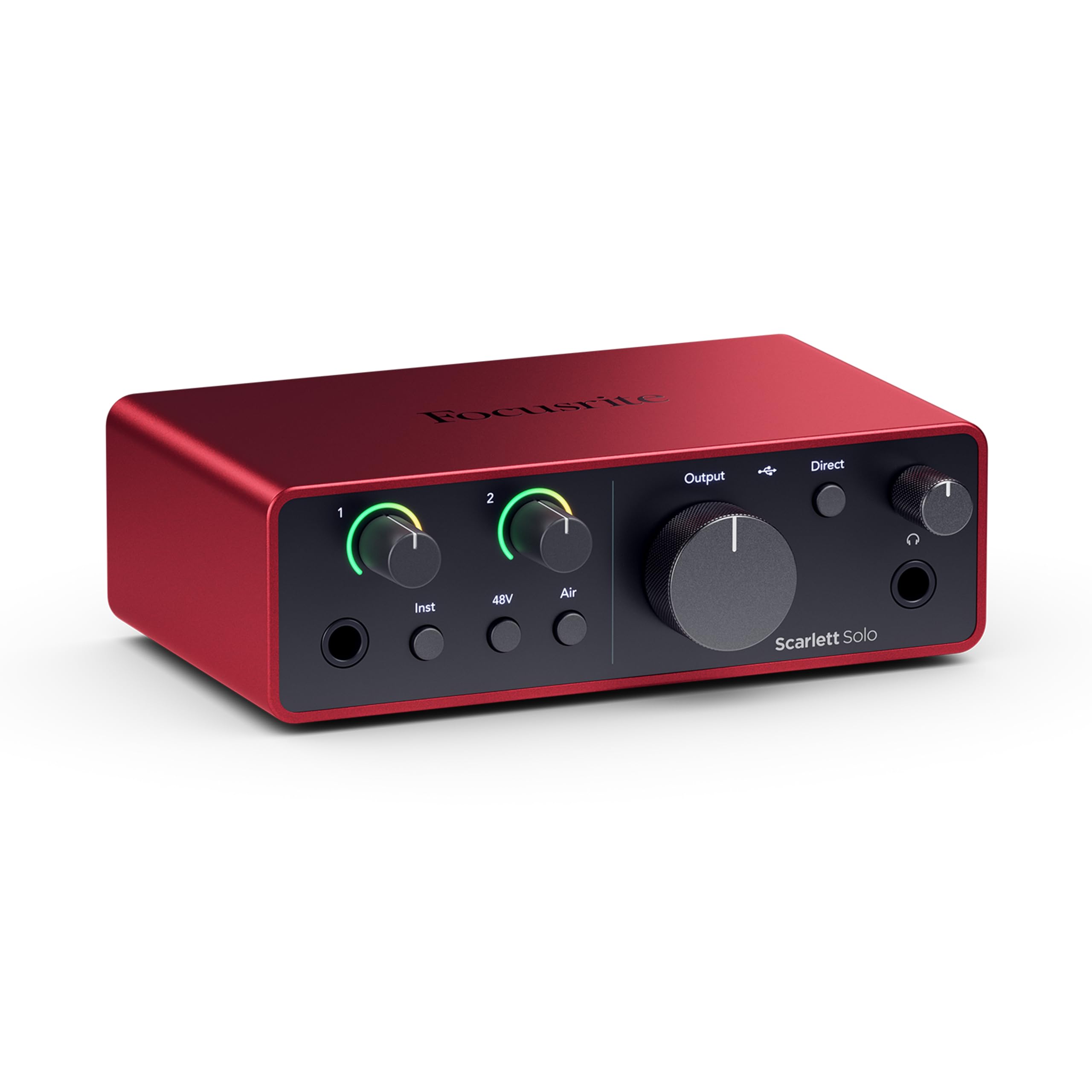
The Solo 3rd Gen is built around a single Hi-Z instrument input with a 56 dB gain range, so an electric or acoustic can go straight into the interface without a DI box. The preamp stays clean at normal recording levels, and the bundled Pro Tools Intro, Ableton Live Lite, Cubase LE, and Hitmaker Expansion cover a first session without extra purchases. That combination makes the first recording setup a matter of plugging in and arming a track.

The instrument gain knob sets the level quickly, the direct monitor switch keeps latency out of the way, and Windows, macOS, and iPadOS all have a mature driver and software ecosystem. For a one-track-at-a-time workflow, this is a stable hub. If you need to record guitar and vocals simultaneously, or two instruments at once, the two-input Scarlett in this lineup is the one to choose.

This suits solo guitarists, vocalists, and podcasters who record one source at a time and want a first interface that doesn't get in the way. The single XLR preamp is clean enough for spoken word and vocals, and the Hi-Z input is tailored for direct guitar. Unit consistency can vary, so test the unit when it arrives and exchange it if crackling, popping, or crashes show up.

💡 Keep the Solo on its own USB port and check for driver updates before assuming an audio issue is hardware-related.

Pros

  • Dedicated Hi-Z input with 56 dB gain range captures electric and acoustic without a DI box.
  • Beginner-friendly operation on Windows, macOS, and iPadOS keeps first recording sessions moving.
  • Bundled DAW and effect suite covers a first session at no extra cost.

Cons

  • Specific software or hardware pairings may need troubleshooting before the connection stays stable.
  • The two jacks can't be captured together, so a guitar-and-vocal take demands the two-input Scarlett.
Our verdict

For one-source-at-a-time sessions, this remains the Scarlett to buy.
Check Latest Price
2

Best for Guitar + Vocals

Scarlett 2i2 4th Gen

92 /100
Sound Score Outstanding

Key details

Hi-Z Inputs
2 Hi-Z inputs
Sample Rate
24-bit/192 kHz
Driver Support
PC, Mac, iPad
iOS Connectivity
iPad compatible
View on Amazon

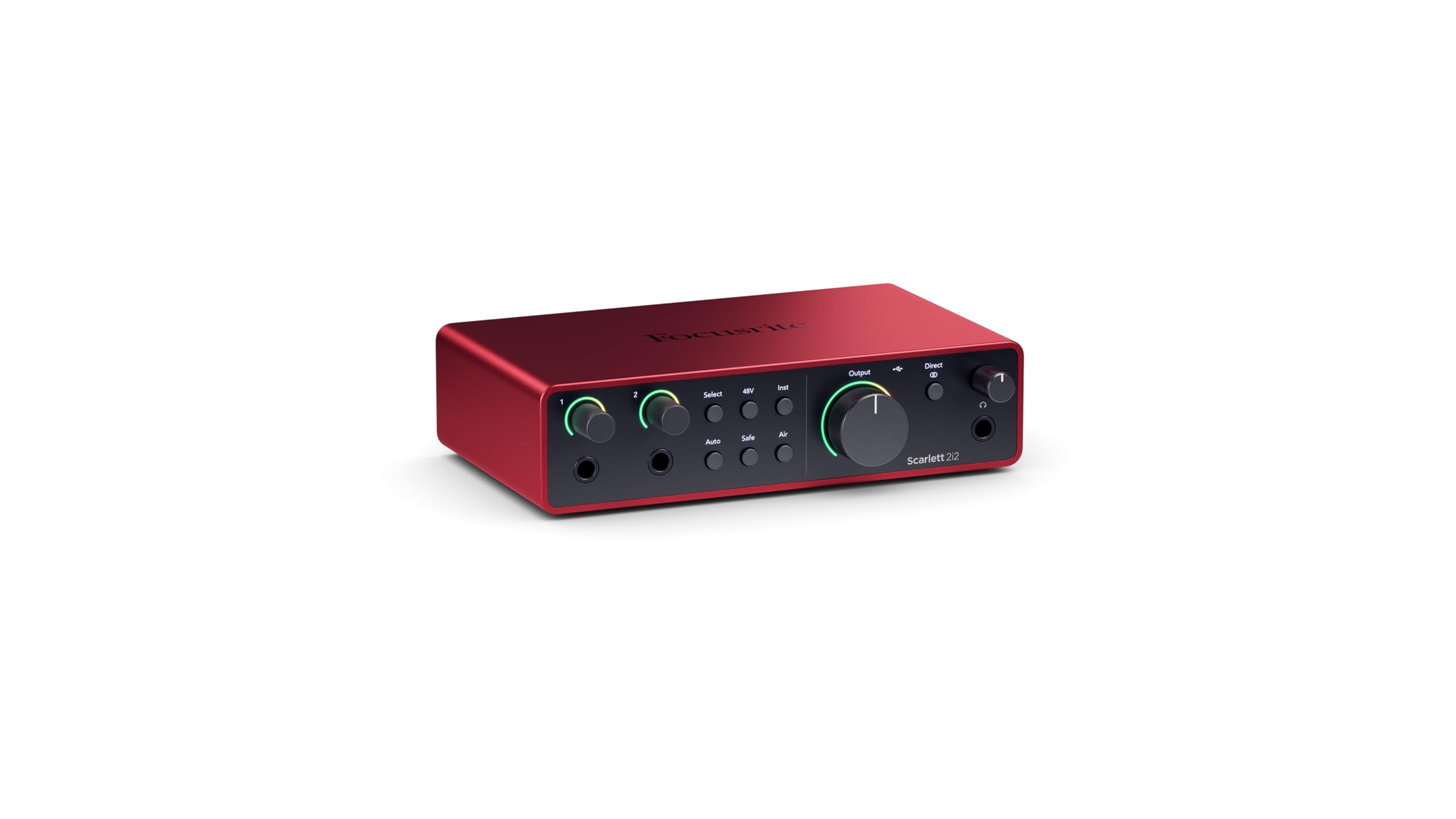
Simultaneous two-instrument recording is where the 2i2 4th Gen stands apart: two Hi-Z inputs, 120 dB of dynamic range, and Air modes give guitar-and-vocal takes clean separation in one pass. Auto Gain and Clip Safe set levels before the performance, so you spend less time fixing clipped takes and more time playing.

This is for songwriters who track an acoustic guitar and vocal together, or streamers who plug in an electric between sets. The dual-input workflow earns its price if you need both sources at once. On Windows, driver behavior and occasional audio dropouts can appear in some setups, so confirm your machine plays well with it before relying on it for live work.

Pros

  • Sound quality stays clean, with ultra-quiet preamps for direct guitar or vocal takes.
  • Auto Gain and Clip Safe remove the guesswork from input levels.
  • Controls are intuitive and setup is quick for first-time interface buyers.

Cons

  • A unit can disconnect mid-session without warning.
Our verdict

For guitar-and-vocal songwriters who want dual Hi-Z capture in a single take, this 2i2 delivers where single-input Scarletts can't.

Check Latest Price
3

Best Multi-Input Value

Behringer UMC404HD

92 /100
Sound Score Outstanding

Key details

Hi-Z Inputs
4 combo inputs
Sample Rate
24-bit/192 kHz
Driver Support
USB
iOS Connectivity
View on Amazon

Four Midas preamps, four combo inputs, MIDI I/O, and 192 kHz in a metal chassis make the UMC404HD the multi-input hub for growing home studios. It steps beyond the entry-level two-input Midas interface by adding two more recording channels plus MIDI connectivity, which matters once amps, mics, and synth gear start sharing the same session.

This fits guitarists who record bands, podcasts, or multiple instruments at once and need MIDI I/O on a modest budget. Phantom-power or output issues can surface on some units, so QC is worth checking. Minimalist single-guitar travel rigs are better served by smaller interfaces.

Pros

  • Four Midas preamps deliver clean, low-noise gain for mics and direct guitar signals.
  • Plenty of analog I/O plus direct monitoring makes multi-source headphone mixes easy to set up.
  • MIDI I/O and 192 kHz support keep it relevant as a home studio grows.

Cons

  • Transformer hum can be audible in quiet rooms or headphone sessions on some units.
Our verdict

For a home studio that needs four inputs and MIDI without a big price jump, the UMC404HD delivers the most recording capability per dollar in this group.

Check Latest Price
4

Best Compact Desktop Interface

Arturia MiniFuse 1

91 /100
Sound Score Outstanding

Key details

Hi-Z Inputs
1 combo input
Sample Rate
24-bit/192 kHz
Driver Support
Windows, macOS
iOS Connectivity
View on Amazon

The MiniFuse 1 keeps the single-combo-input layout of this class while adding MIDI I/O and a USB hub, plus a five-year warranty. That makes it a practical desktop station for a guitarist who also runs a controller or wireless dongle. Audio quality at 192 kHz matches the price tier, and the bundled Ableton Live Lite, Analog Lab Intro, and Guitar Rig 6 LE cover first demos without extra purchases.

This suits desktop guitarists who want one clean instrument input and a compact hub for MIDI and USB accessories. Buyers who prefer minimal software registration should budget time for the account step; occasional disconnects have been noted on some units, so long sessions deserve a quick cable check.

Pros

  • Direct guitar recordings come through with the clarity this price tier promises at 192 kHz.
  • Ableton Live Lite, Analog Lab Intro, and Guitar Rig 6 LE cover first demos without extra purchases.
  • MIDI I/O and a USB hub let a controller and wireless dongle share the same desktop port.

Cons

  • Software registration and account creation add a step before the included plugins unlock.
  • Occasional disconnects can interrupt long tracking sessions on individual units.
Our verdict

The MiniFuse 1 fits when a 192 kHz single input, MIDI I/O, and a USB hub need to share one desktop space.

Check Latest Price
5

Best Mobile Guitar Interface

IK iRig HD 2

89 /100
Sound Score Excellent

Key details

Hi-Z Inputs
1 Hi-Z input
Sample Rate
24-bit/96 kHz
Driver Support
iOS, Mac, PC
iOS Connectivity
iOS focus
View on Amazon

The iRig HD 2 takes a 24-bit/96 kHz Hi-Z guitar input to iPhone, iPad, and Mac with Lightning, USB-C, and USB cables included. It pairs with AmpliTube 5 SE and TONEX SE, so mobile practice and quick single-track captures stay inside a digital signal path instead of the noisier 3.5 mm adapter route.

This is the interface for guitarists who want amp-less practice through a phone or tablet with GarageBand or AmpliTube as the tone source. It is not a desktop multi-input recording hub, latency can be app-dependent, and cable/output lifespan varies between units — so it suits mobile players who accept those boundaries.

Pros

  • Works well with iPhone and GarageBand.
  • Compatible with many devices and apps.
  • Simple to use and fast to set up for mobile practice.

Cons

  • In some gain and monitoring setups, output level can be low or static may appear.
Our verdict

The iRig HD 2 is the mobile-specific pick — it fits a phone-centric guitar life better than a desktop-focused box.

Check Latest Price
6

Best for Studio One Beginners

PreSonus Studio 24c

92 /100
Sound Score Outstanding

Key details

Hi-Z Inputs
2 combo inputs
Sample Rate
24-bit/192 kHz
Driver Support
USB-C, MIDI
iOS Connectivity
View on Amazon

PreSonus includes Studio One 6 Artist with the Studio 24c, so a guitarist can plug into the Hi-Z input and record immediately. The two XMAX-L preamps deliver clean instrument and vocal captures at normal gain, and the mixer knob keeps direct monitoring low-latency. USB-C and MIDI I/O make this a compact hub for a synth-equipped desk.

This fits guitarists beginning with Studio One who want two inputs and MIDI in a small footprint. A low-output dynamic mic such as the SM7B will need an inline preamp to reach a usable level; the rest of the setup is easy to manage.

Pros

  • Studio One 6 Artist is included, so first recordings don't require a separate DAW purchase.
  • Two XMAX-L preamps keep guitar and vocal tracks clean at normal gain levels.
  • USB-C and MIDI I/O fit a modern desktop setup with minimal cable clutter.

Cons

  • Headphone output sits on the rear, making front-of-desk monitoring less immediate.
Our verdict

For guitarists building a Studio One-centered desktop, this two-input box covers clean recording and MIDI without the bulk of a larger studio hub.

Check Latest Price
7

Best Budget Entry

Behringer UMC22

91 /100
Sound Score Outstanding

Key details

Hi-Z Inputs
1 instrument input
Sample Rate
48 kHz
Driver Support
ASIO4ALL
iOS Connectivity
View on Amazon

The UMC22 puts a Midas-designed preamp in front of a dedicated instrument input, bringing the brand's recording pedigree to the budget tier. Direct monitoring and no-frills controls keep the focus on playing, not configuration. It is the least expensive way to get that preamp character in a dedicated interface.

This is for first-time guitarists on a strict budget who record into a Windows or Mac computer; mobile/iOS recording is not supported. Noise can appear at high gain, and Windows setup depends on ASIO4ALL rather than a custom driver — acceptable tradeoffs at this price. If your plan is a simple guitar-into-computer setup, the UMC22 matches that scope.

Pros

  • Midas-designed preamp and dedicated Hi-Z input give guitar tone a clean foundation at an entry-level price.
  • Direct monitoring and simple controls let beginners hear themselves while tracking without adding extra hardware.
  • Entry-level price puts a Midas preamp within reach of first-time home studios.

Cons

  • Records one guitar or mic at a time, so simultaneous voice-and-guitar takes need a different interface.
Our verdict

For a first-time guitarist recording into a computer on a strict budget, this is the cheapest way into Midas-preamp basics.

Check Latest Price
8

Budget Dual-Input

M-Audio M-Track Duo

89 /100
Sound Score Excellent

Key details

Hi-Z Inputs
2 combo inputs
Sample Rate
48 kHz
Driver Support
Mac, Windows
iOS Connectivity
View on Amazon

Two combo XLR/instrument inputs with Crystal preamps and a USB/Direct switch for zero-latency monitoring make this a budget dual-source interface for recording a guitar and a mic together. Gain taper near maximum and Mac OS Sonoma driver uncertainty keep it behind the top dual-input picks; some units can stop functioning after months, so QC is a variable.

Pros

  • Solid quality and performance at a budget price.
  • Good value for a dual-input budget interface.

Cons

  • Some units can exhibit distorted or high-pitched audio; a quick test pass before long sessions is worthwhile.
Our verdict

For a guitarist who wants a two-input recording rig without leaving the budget tier, this is the entry point to compare against the slimmer single-input interfaces.

Check Latest Price
9

Budget Solo Recording

M-Audio M-Track Solo

88 /100
Sound Score Excellent

Key details

Hi-Z Inputs
1 instrument input
Sample Rate
48 kHz
Driver Support
Mac, Windows
iOS Connectivity
View on Amazon

Compact and easy to use, the M-Track Solo records one guitar or mic at a time with a Crystal preamp and zero-latency direct monitoring. Ground-loop hum can surface in some desktop setups, and the gain dial jumps near maximum, which makes the dual-combo UMC22 a more polished option for the same buyer.

Pros

  • Good build quality and useful functionality for the price.
  • Simple to set up, so a first-time guitarist can record without much fuss.

Cons

  • Longer sessions can reveal intermittent audio dropouts, so a longer trial run before relying on it is worth doing.
Our verdict

For a casual desktop guitarist recording one source at a time, the M-Track Solo is a low-cost entry into computer recording.

Check Latest Price
10

Cheap iOS Practice

IK iRig 2

89 /100
Sound Score Excellent

Key details

Hi-Z Inputs
1 Hi-Z input
Sample Rate
48 kHz
Driver Support
iOS/Mac
iOS Connectivity
iOS/Mac
View on Amazon

This iRig 2 gets an iPhone/iPad guitarist playing amp sims through a 3.5mm connection and 1/4-inch Hi-Z input. The analog front end adds audible noise, and Android compatibility is inconsistent, which keeps it below a digital mobile interface. For quick iOS practice, the tradeoff is acceptable.

Pros

  • Handles GarageBand and mobile guitar apps without hassle, so a guitar can be playing through an amp sim within seconds.
  • Covers mobile guitar practice, podcasting, and streaming through one pocket-sized adapter.

Cons

  • In a quiet headphone setup, static can surface while charging; casual practice through the amp output is less affected.
Our verdict

For one-guitar travel practice on an iPhone, this is the budget-friendly adapter; leave desktop studio duties to a USB interface.

Check Latest Price
11

Premium Compact Recording

Audient iD14 MKII

91 /100
Sound Score Outstanding

Key details

Hi-Z Inputs
1 instrument input
Sample Rate
96 kHz
Driver Support
Mac, PC, iOS
iOS Connectivity
iOS support
View on Amazon

The iD14 MKII pairs Class-A console preamps with a rugged all-metal housing, and its monitor-mix section and dual headphone outputs suit a Mac/iOS-leaning studio recording guitar one input at a time. Windows use adds a driver-registration step and setup friction; the premium price also moves it beyond the entry-level guitar sweet spot.

Pros

  • Crystal-clear Class-A preamps capture guitar with good separation at usable gain.
  • All-metal build with monitor mixing and dual headphone outputs supports compact desktop recording sessions.

Cons

  • Windows setup requires driver registration before the unit runs; Mac/iOS users avoid that step.
Our verdict

For Mac/iOS guitarists who prioritize preamp clarity and a compact metal build, this is the interface to consider.

Check Latest Price
12

Newest Scarlett Buyers

Scarlett Solo 4th Gen

92 /100
Sound Score Outstanding

Key details

Hi-Z Inputs
1 Hi-Z input
Sample Rate
24-bit/192 kHz
Driver Support
PC, Mac, iPad
iOS Connectivity
iPad compatible
View on Amazon

The Scarlett Solo 4th Gen brings updated Air modes and 120 dB dynamic range to the single Hi-Z workflow, delivering clean guitar takes in a compact metal chassis. Setup is easy. The new preamp justifies the higher price when you want the latest Scarlett sound. The 3rd Gen covers the same core workflow for less, and unit consistency can vary.

Pros

  • Near-studio-grade recording quality from a single-input box.
  • Beginner-friendly setup that gets first-time home recorders tracking quickly.

Cons

  • In a Windows-based home studio, driver behavior can vary; occasional audio dropouts or robotic distortion may interrupt a take.
Our verdict

Suits guitarists who want the newest preamp and Air modes in a single-input box; if that doesn't matter, the 3rd Gen still covers the core workflow for less.

Check Latest Price

How to Choose

Instrument Inputs

Electric guitar pickups are high-impedance sources; they need a Hi-Z input that matches their impedance. Plugging straight into a line input rolls off treble and lowers level. A single Hi-Z input covers one guitar at a time; two Hi-Z inputs let you capture guitar and vocals or two guitars at once.

Preamp Gain and Noise

Gain is how much the preamp can boost a weak pickup signal; noise floor is how much hiss comes with that boost. A 56 dB gain range handles most passive guitar pickups cleanly, while cheaper preamps reveal their limits when you turn up for a quiet acoustic passage. If the gain knob has to sit near maximum, the noise will come with it.

Sample Rate and Bit Depth

24-bit/96 kHz is enough for guitar recording; 192 kHz increases file size and CPU load without adding audible tone. The spec sheet makes higher numbers look better, but the converter and preamp shape the sound far more. Use the extra budget on input count or driver quality instead.

Driver Stability and OS Support

The driver is the layer between the interface and your DAW. When it misbehaves, you get crackles, dropouts, or a device that vanishes mid-take. macOS devices are often class-compliant, while Windows may require a dedicated driver or ASIO4ALL; a stable 48 kHz interface beats a 192 kHz one that disconnects.

Simultaneous Inputs

Input jacks do not all record at once. A single-input interface records one guitar track at a time, which is fine for solo work but blocks guitar-and-vocal takes. If you plan to add vocals, a second instrument, or a podcast, buy a two-input model from the start.

iOS and Mobile Use

iOS devices are picky about audio hardware. A USB interface with native iPadOS support gets a stable digital connection, while analog 3.5 mm adapters can add noise and unpredictable latency. For mobile practice, choose a digital path and confirm your exact iPhone or iPad model is supported.

Software and Warranty

Bundled DAWs and amp sims add real value, but registration friction can sour the first session. A longer warranty protects the hardware that actually wears out; software codes expire or go unused. Weigh the bundle, but do not let it replace input count and driver quality.

Frequently Asked Questions