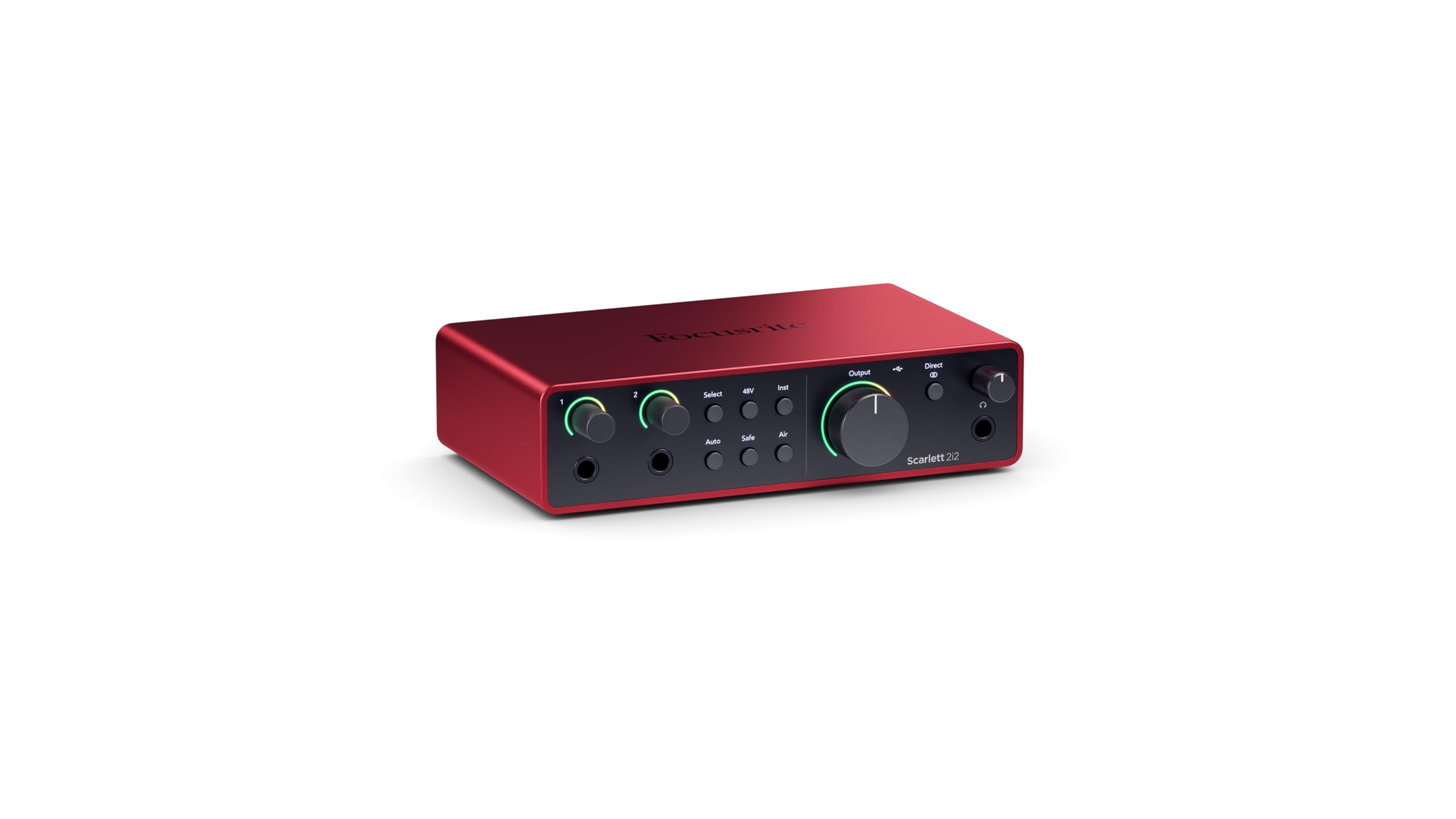
Best Overall

Focusrite Scarlett Solo 3
Key details
- Extras
- Bus-powered
- Build & Controls
- Gain Halo, Air mode
- Driver Stability
- Windows dropouts reported
- Simultaneous I/O
- 2-in / 2-out
The Scarlett Solo 3rd Gen delivers 56 dB of mic gain, Air mode, and a bus-powered connection in a package that gets a first session running quickly. The front panel combines one XLR and one Hi-Z instrument input, so a vocal mic plus a direct guitar covers the most common solo tracking setup. Controls are basic and legible, and the Gain Halo catches clipping before it reaches the DAW.
It records at 24-bit/192 kHz, which is more resolution than streaming needs but does not complicate the workflow. Home studio owners use the Solo as a daily driver for voice, acoustic guitar, and podcasting duties. The 56 dB gain is enough for common dynamic mics, and Air mode adds a useful high-frequency lift for budget condensers. For one mic or one guitar, the sound is clean enough for practice, demos, and entry-level releases.
This is the right fit for solo musicians, entry-level podcasters, and streamers who need one clean channel. It works with macOS, Windows, and iPadOS, so a laptop setup is enough. Unit-to-unit consistency can vary, so if crackling or dropouts show up in the first week, use the warranty rather than troubleshooting endlessly.
Pros
- Basic setup and gain staging are easy enough for a first-time recordist.
- Entry-level price includes the preamp gain, Air mode, and clip protection most beginners need.
- Single-mic vocal and guitar recordings come through with clarity and usable headroom.
Cons
- Third-party app routing can require manual setup; the hardware itself remains functional.
- Single XLR input limits the setup to one microphone, so two-mic podcasting or live duos are out.
The Solo 3rd Gen covers one mic and one instrument without adding friction to a first session. If two live mics are already in the plan, a two-input interface is the better place to start.