9 Best Audiophile Bluetooth Speakers of 2026: Stable Wired Inputs

The best audiophile Bluetooth speakers keep wired inputs where they matter — plus sub-outs and stable pairing for critical listening.

Bluetooth is convenient, but it is the weakest link in many audiophile speaker setups. Dropouts, pairing quirks, and app dependency show up long after the initial excitement fades. The speakers that last are the ones with a wired fallback and a connection path that still works when wireless gets messy.

Input versatility matters just as much as driver size. Optical, coaxial, RCA, or phono inputs let a speaker serve a turntable, TV, or desktop DAC without relying on Bluetooth at all. A subwoofer output gives a bass-limited bookshelf a clear upgrade path instead of an early replacement.

This guide keeps the focus on powered home speakers that combine real hi-fi sound, practical connections, and honest limitations — so you know which one fits your room and your sources. It is about finding the right boundary between wireless convenience and long-term stability.

About the Sound Score: This comparative score is calculated from a product's published customer rating and review volume. It is not a laboratory measurement or a hands-on test result.

1

Best Overall

Edifier S1000MKII

90 /100
Sound Score Outstanding

Key details

Inputs
Optical, coaxial, dual RCA
Bluetooth Codec
aptX HD
Power & Drivers
5.5-in aluminum, 1-in titanium, 120W
Wi-Fi Ecosystem
No
View on Amazon

The S1000MKII produces a clear, accurate, full-range sound from a 5.5-inch aluminum mid-bass and a 1-inch titanium dome tweeter, with dual 60W Class D amps supplying each cabinet. Frequency response reaches from 45Hz to 40kHz, so the low end has real body without needing a subwoofer in a medium-size room. The aluminum cone keeps kick drums defined, while the titanium dome carries cymbal and string detail without glare. Optical, coaxial, dual RCA, and aptX HD Bluetooth cover both wired critical listening and phone-based playback.

Bluetooth pairing is quick, and aptX HD holds a stable link across a typical living room. At higher volumes, the Class D amps keep the presentation composed rather than turning brittle, which sets this pair apart from smaller budget actives that get shouty when pushed. The soundstage stays focused when you sit close, so near-field listening works as well as placing them on a TV cabinet. That combination of clean output and easy wireless means the speaker does not need a lot of fussing before it sounds right.

Strong performance per dollar is the thread here. Buyers comparing the S1000MKII to the budget R1280DBs will notice the extra low-end weight, the better wireless codec, and the higher amp output; those are the differences that justify the price jump for critical listening. The wood-grain finish also fits home audio setups without looking like video-game peripherals. It is a real furniture-grade pair rather than a pair of budget black boxes.

The input panel is part of the same practical story. No app is required, no account setup, and no firmware prompts; the physical controls manage source switching without a phone. That removes the connected-device layer that Wi-Fi speakers can introduce, which is worth something to listeners who just want to press play.

This is for critical near-field and bookshelf listeners who want hi-fi without a separate amp, and for TV/desktop setups that need flexible input choices. Amplifier and Bluetooth behavior can vary between units, so the wired inputs are the more predictable path for long listening sessions. For anyone planning to drive the speakers mostly through a computer or TV, those wired inputs should be the default; Bluetooth becomes a convenience layer rather than the primary connection.

💡 Pair via aptX HD from a compatible phone for the cleanest wireless path.

Pros

  • Clear, accurate, full-range sound with strong low-end extension
  • Easy Bluetooth pairing with aptX HD for better wireless audio
  • Strong performance per dollar
  • Wood-grain finish fits home audio setups without looking like tech gear
  • Multiple wired inputs make it a flexible hub for TV, CD, or computer audio

Cons

  • No built-in Wi-Fi streaming or multiroom; whole-home setups need a separate streamer.
  • Pair footprint is larger than compact tabletop speakers; small shelves or desks will feel crowded.
Our verdict

The S1000MKII makes amp shopping unnecessary and keeps the system simple: near-field critical listening, TV duty, and aptX HD wireless all come from one cabinet pair.

Check Latest Price
2

Best Value Bookshelf

Edifier R1280DBs

93 /100
Sound Score Outstanding

Key details

Inputs
Optical, coaxial, RCA
Bluetooth Codec
SBC
Power & Drivers
4-in woofer, 0.75-in tweeter, 42W
Wi-Fi Ecosystem
No
View on Amazon

The R1280DBs pairs optical, coaxial, RCA, Bluetooth, and a subwoofer output with a 4-inch woofer and silk-dome tweeter at a price that undercuts the usual cost for this feature set. The sound is clear and composed, with enough warmth for vocals and enough detail for critical listening without tipping into brightness. At 42W RMS it fits nearfield desktop setups and small rooms better than large open areas. Compared with the pricier reference pick in this lineup, it trades headroom and aptX HD for a much lower entry price.

The cabinets feel solid, and the wood-grain finish reads as more expensive than the price tag. Bluetooth 5.0 pairing is straightforward, and the optical and coaxial inputs make wired connection easy for a TV or desktop source. The subwoofer output includes crossover control, so the path to deeper bass is already built in without adding a separate preamp.

This is for budget desktop, TV, or record-player setups where input flexibility matters more than raw output. Standalone bass is modest without the optional sub, so buyers who plan to add a subwoofer later will get the most from this pair. At this price, the input flexibility and subwoofer output make it a smarter long-term buy than typical single-input Bluetooth speakers. Buyers who already own a subwoofer or plan to pick one up later will find the crossover output easy to live with.

💡 Pair with a powered subwoofer for deeper low end when you need it.

Pros

  • Crisp, clear sound with strong value for the price.
  • Solid construction and attractive cabinets that outperform their price.
  • Multiple inputs including optical, coaxial, RCA, and Bluetooth.
  • Wood-grain finish looks more expensive than the price suggests.

Cons

  • Remote control needs close range and line-of-sight; best for desktop listening rather than couch-side control.
  • Bluetooth behavior can vary between units; wired inputs are the stable fallback.
Our verdict

The R1280DBs is the value play in this set: input flexibility and clear sound at a budget price, with room to grow a subwoofer later.

Check Latest Price
3

Most Versatile Powered Bookshelf

Klipsch R-51PM

92 /100
Sound Score Outstanding

Key details

Inputs
Phono, optical, USB
Bluetooth Codec
SBC
Power & Drivers
5.25-in woofer, 1-in horn, 120W
Wi-Fi Ecosystem
No
View on Amazon

The R-51PM is a powered bookshelf monitor pair with horn-loaded dynamics, a built-in phono preamp, USB digital input, and optical input — a true multi-source system that does not require an external amplifier.

Bluetooth pairing is quick, and the 120W total output delivers clear playback with strong projection from the 5.25-inch woofer and aluminum horn tweeter. Vocals and brass sit forward in the mix, giving music a lively, energetic character that rewards critical listening.

Hookup is simple: the active speaker handles all connections, and the second speaker links with a single cable. The built-in phono stage accepts a turntable directly, so vinyl playback needs no extra box. The compact cabinet looks sharp with grilles off, and switching between phono, USB, optical, and Bluetooth is a button press away.

This is the runner-up for critical listeners who want a powered bookshelf with a phono stage and digital inputs. Turntable owners can connect directly, while TV and gaming setups can use USB or optical; the 3.5mm input covers older gear too. The horn tweeter can sound bright in hard rooms, so buyers who prefer soft, laid-back highs should look elsewhere.

💡 Aim the remote directly at the active speaker; the IR window is small, so a clear line of sight helps.

Pros

  • Loud, dynamic, clear playback with horn-loaded energy that projects well in a room.
  • No separate amplifier required, and the powered pair delivers high output per dollar.
  • Bluetooth pairing is simple, and switching among phono, USB, optical, and line inputs is quick.
  • Compact bookshelf design looks sharp, especially with the grilles removed.

Cons

  • Some units may produce a faint static or hiss in quiet rooms while powered.
  • Input-specific problems can develop in some units, leaving one connection unresponsive while others keep working.
Our verdict

The R-51PM is the powered pair for turntable owners and digital-input setups that want horn-loaded energy without an external amp.

Check Latest Price
4

Best Lifestyle Tabletop

Marshall Stanmore III

90 /100
Sound Score Outstanding

Key details

Inputs
RCA, 3.5mm
Bluetooth Codec
SBC
Power & Drivers
5-in woofer, 0.75-in tweeter, 80W
Wi-Fi Ecosystem
No
View on Amazon

The Stanmore III is the room-filling tabletop in this lineup, not a compact desktop speaker. Its 80W system drives a 5-inch woofer and a 0.75-inch tweeter from a single plug-in cabinet, and it produces louder, tighter bass than its frame suggests. The Marshall amp styling dresses the cabinet in faux leather and a woven grille, so it works as furniture in a way most powered speakers don't. Bluetooth 5.2 pairing is fast and holds range, with RCA and 3.5mm inputs for non-wireless sources. The larger cabinet and 5-inch woofer set it apart from the smaller Marshall tabletop, which suits desks and tight shelves rather than open living rooms.

For its cabinet size, the Stanmore III delivers surprising weight and clarity; it reads as a much larger speaker and gives up little to bookshelf pairs on first listen. At higher output, the 5-inch woofer holds together well, and the treble stays smooth rather than splashy. Rock, hip-hop, and electronic tracks get the low-end push they need, while vocals remain understandable at moderate volume.

This is the statement speaker for style-focused living room listeners who want one attractive cabinet and simple Bluetooth/RCA playback. Tuning is consumer-friendly rather than reference-neutral, so audiophiles seeking a flat monitor should compare the top-pick bookshelf pair instead. It is a plug-in-only design, so it stays on the media console or credenza; that fits a fixed living-room setup but rules out moving it to a porch or backyard. In apartments and medium rooms, the bass presence and furniture-grade looks are exactly the point.

Pros

  • Room-filling 80W output with tight bass that carries across medium living rooms.
  • Timeless Marshall amp styling in a furniture-grade cabinet that anchors a room.
  • Fast Bluetooth 5.2 pairing with strong range and wired RCA/3.5mm inputs.
  • Delivers enough bass, volume, and cabinet quality to justify the price for style-first buyers.

Cons

  • Startup behavior can be inconsistent, and the speaker may need a power-cycle if it doesn't wake.
  • Wired connections are limited to RCA and 3.5mm, so optical or coaxial sources need an adapter.
Our verdict

The Stanmore III is the living-room statement speaker: iconic Marshall looks, strong bass, and easy Bluetooth/RCA connections in a single cabinet.

Check Latest Price
5

Best Premium Compact Hi-Fi

KEF LSX II

83 /100
Sound Score Excellent

Key details

Inputs
HDMI ARC, USB-C, line-in
Bluetooth Codec
SBC
Power & Drivers
4.5-in coax, 0.75-in tweeter, 200W
Wi-Fi Ecosystem
AirPlay 2, Chromecast, Roon
View on Amazon

The KEF LSX II is a compact wireless speaker pair that produces crisp, well-separated imaging from its 4.5-inch coaxial driver and 200W of amplification. Unlike the top pick's no-app active bookshelf, this system adds Wi-Fi streaming, HDMI ARC, USB-C, and Roon support in a footprint suited to a desk or small living room.

Clean articulation and precise placement make the LSX II sound larger than a two-cabinet desktop system has a right to. Low-frequency extension is controlled but limited, so listeners who want sub-bass weight will need a subwoofer or a larger main speaker. The small cabinet holds together on busy tracks without strain.

This system is for premium desktop and small-room listeners who value source flexibility as much as compact size. Roon users, HDMI ARC TV owners, and computer audiophiles wanting USB-C audio will find inputs the top pick cannot match. The trade-off is app involvement: wired HDMI ARC and USB-C are the more stable path for daily listening. Budget-conscious buyers happy with mid-range active bookshelves should stay with the simpler top pick.

💡 Use the HDMI ARC or USB-C inputs for wired playback once the system is set up.

Pros

  • Crisp, spacious imaging from the coaxial driver; the compact pair sounds much larger than its size.
  • Modern, premium cabinet that fits a living room or desktop without looking like conventional audio gear.
  • HDMI ARC, USB-C, and line-in inputs make it a practical hub for TVs, computers, and music sources.
  • Streaming covers AirPlay 2, Chromecast, Bluetooth, and Roon, so it fits a range of playback ecosystems.

Cons

  • Remote D-pad and transport controls can respond unevenly, making precise volume changes feel like guesswork.
  • App-based wireless setup can be finicky, and initial pairing may require multiple attempts.
Our verdict

The LSX II is the compact wireless pick for listeners who need HDMI ARC, USB-C, and Roon support without giving up high-end imaging. Roon users and TV-connected desktop setups get a small-footprint system that plays far beyond its size.

Check Latest Price
6

Best Multi-Room / Dolby Atmos

Sonos Era 300

91 /100
Sound Score Outstanding

Key details

Inputs
Wi-Fi, Bluetooth, AirPlay 2
Bluetooth Codec
SBC
Power & Drivers
6 drivers, 300W
Wi-Fi Ecosystem
Sonos ecosystem
View on Amazon

The Era 300 is the spatial audio anchor of the Sonos lineup: six drivers fire forward, to the sides, and upward in a 300W Dolby Atmos field, with multiroom and home theater integration built into the same system.

Trueplay room correction tunes the six drivers to the space, and Bluetooth or AirPlay 2 handles quick playback when you do not want to go through the main system. The Wi-Fi path remains the primary route for Atmos audio and multiroom grouping.

Atmos content is where this speaker does its thing; regular stereo won't fully exploit it. Sonos households pairing it with an Arc or Beam get the most value, while traditional two-channel listeners who want simple Bluetooth should look at the wired bookshelf options in this set.

💡 Play Dolby Atmos tracks rather than plain stereo to get the intended spatial effect.

Pros

  • Six-driver Atmos array creates an immersive soundstage with real height and width.
  • Pairs with Sonos Arc or Beam for surround duty and multiroom grouping.
  • App-based setup and expansion work within the Sonos ecosystem you already own.

Cons

  • Operation depends on the Sonos app, so Wi-Fi friction adds setup and control steps.
  • Wireless dropouts can interrupt playback in some setups and may require troubleshooting.
Our verdict

Sonos households with an Arc or Beam will get the most from it as a surround pair or standalone Atmos speaker. For traditional two-channel listening, the wired bookshelf options in this list fit better.

Check Latest Price
7

Compact Vinyl Tabletop

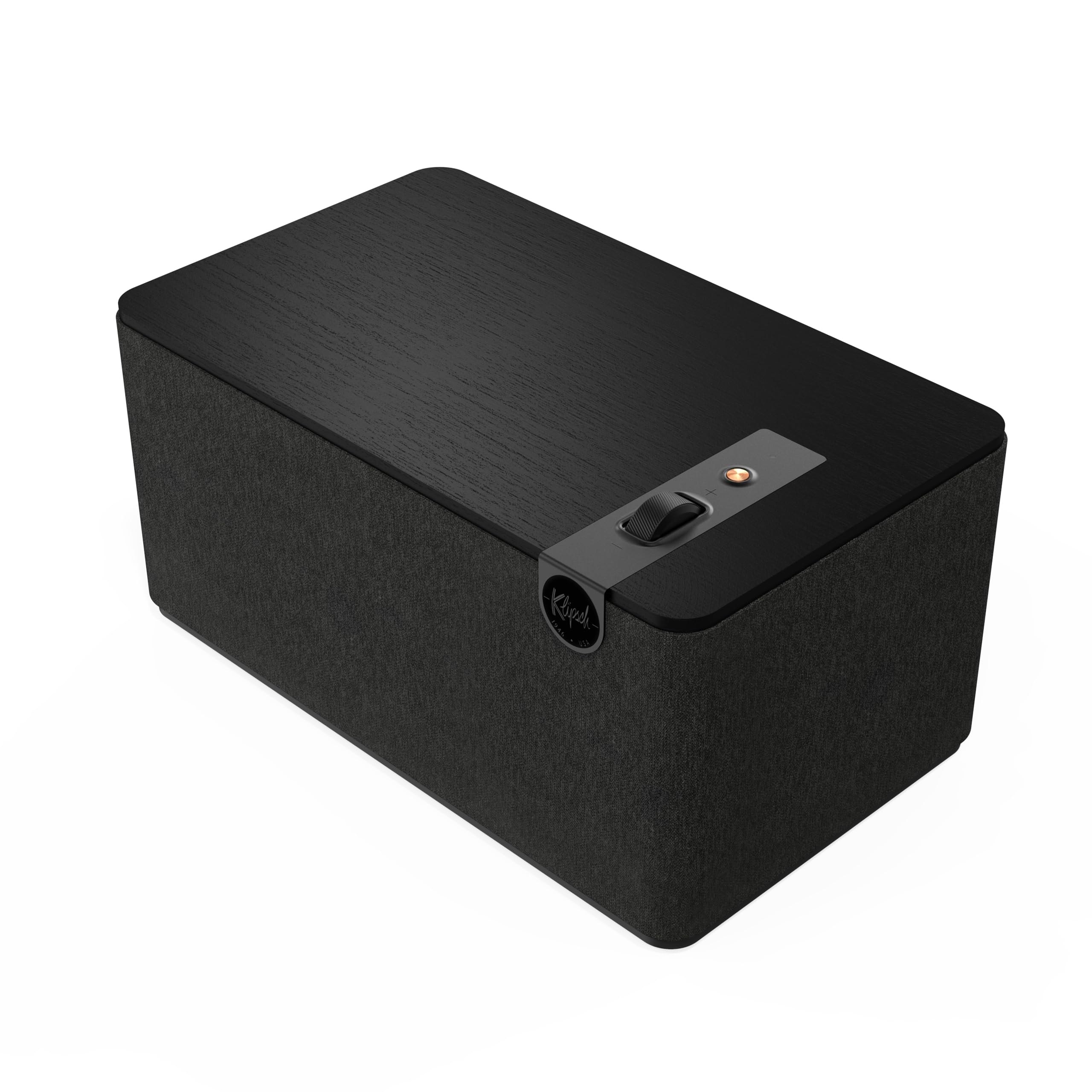
Klipsch The Three Plus

82 /100
Sound Score Excellent

Key details

Inputs
Phono, optical, USB-C
Bluetooth Codec
SBC
Power & Drivers
5.25-in woofer, 120W
Wi-Fi Ecosystem
No
View on Amazon

Klipsch's Three Plus pairs a real wood veneer cabinet with a built-in phono preamp, 120W, and RCA, optical, and USB-C inputs, so a compact vinyl setup needs no extra preamp box. The sound stays clear and full-bodied for a single tabletop cabinet, while Broadcast Mode and the Klipsch Connect app add convenience if you want them. The connected side is less polished than the wired path: pairing can be finicky, and in quiet rooms the volume scale starts above a whisper. That boundary places it below the powered bookshelf pair in this guide for critical listening; this is a furniture-grade solution for listeners who want a statement piece and a turntable-friendly front end.

Pros

  • Clear midrange and treble plus strong bass for the cabinet size make it easy to live with.
  • Real wood veneer and metal construction give it furniture-grade presence beside a turntable.
  • Built-in phono preamp plus optical, USB-C, and RCA inputs cover turntable, TV, and computer sources.

Cons

  • In some cases, the speaker can become unresponsive until power-cycled; wired inputs keep playback moving.
  • A single cabinet can't deliver true left/right separation; that role belongs to a powered bookshelf pair.
Our verdict

For a compact turntable setup that values furniture-grade looks and a built-in phono preamp, this cabinet is at its best on the phono input.

Check Latest Price
8

Sonos Surrounds, Fills

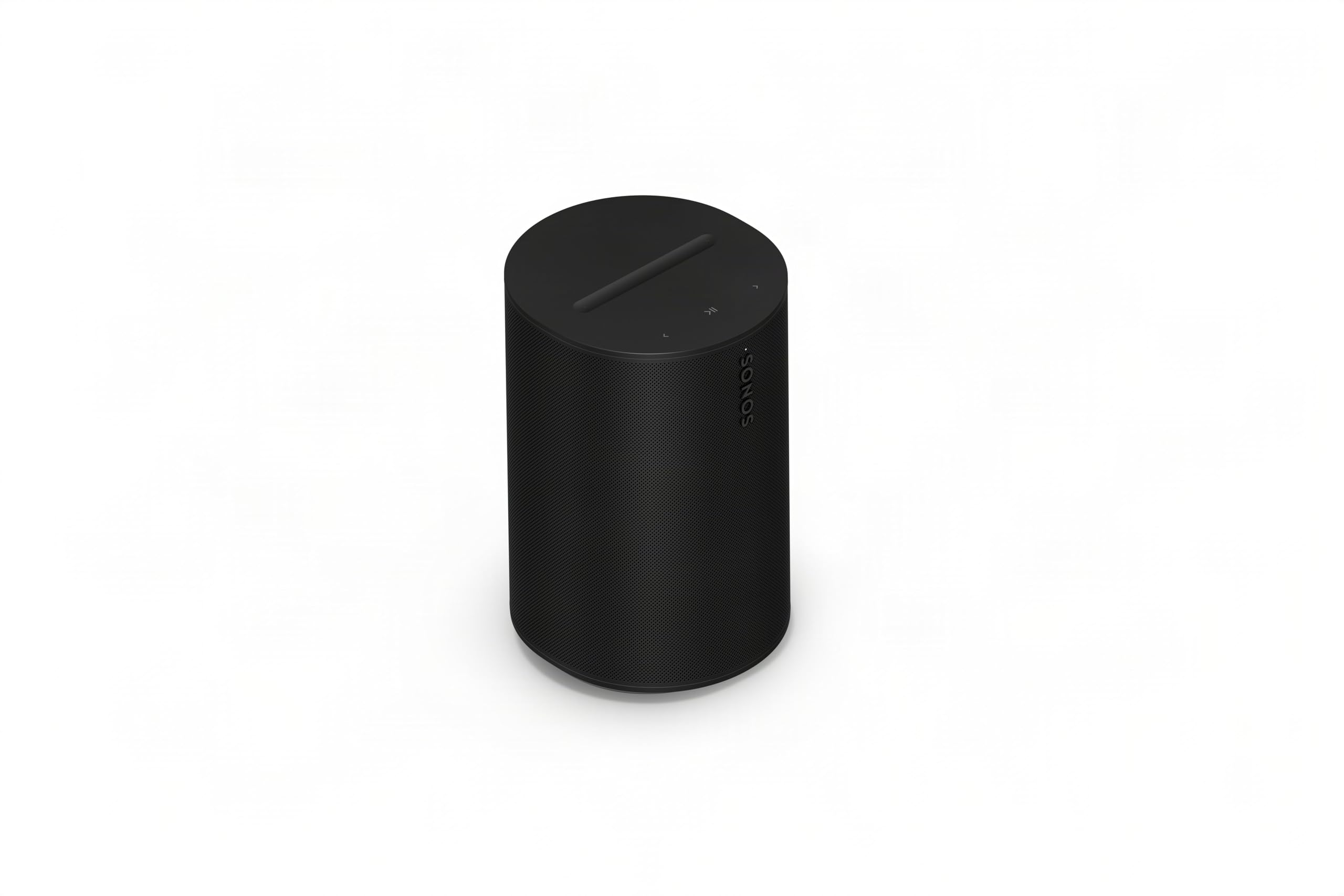
Sonos Era 100 SL

85 /100
Sound Score Excellent

Key details

Inputs
Wi-Fi, Bluetooth, AirPlay 2
Bluetooth Codec
SBC
Power & Drivers
Dual tweeters, midwoofer
Wi-Fi Ecosystem
Sonos ecosystem
View on Amazon

Dual angled tweeters and a midwoofer give the Era 100 SL room-filling clarity in a compact cabinet, and Trueplay tailors the output to awkward room shapes. Setup through the Sonos app is quick when adding a fill or surround, while Bluetooth, AirPlay 2, and line-in cover sources outside the ecosystem. The mic-free build removes voice assistance, which suits privacy-conscious rooms. For a critical-listening search, the important boundary is that this is a system speaker, not a standalone critical-listening audiophile hub; it also stops before the Era 300's spatial-audio ambitions. For a Sonos household building out multiroom audio, the Era 100 SL is a cost-effective building block.

Pros

  • Compact cabinet still fills a room with clear sound.
  • App-based setup and zone grouping are quick inside an existing Sonos system.
  • Bundles a wide range of Sonos functionality at a budget-friendly entry point.

Cons

  • First-time users may find the Sonos app's layout indirect for something as simple as setup.
  • Wireless links to other Sonos speakers can drop intermittently in certain Wi-Fi environments.
Our verdict

Use it as a fill or surround in a Sonos system you already own. The active bookshelf top pick in this roundup suits the primary listening position better.

Check Latest Price
9

Desktop Studio Use

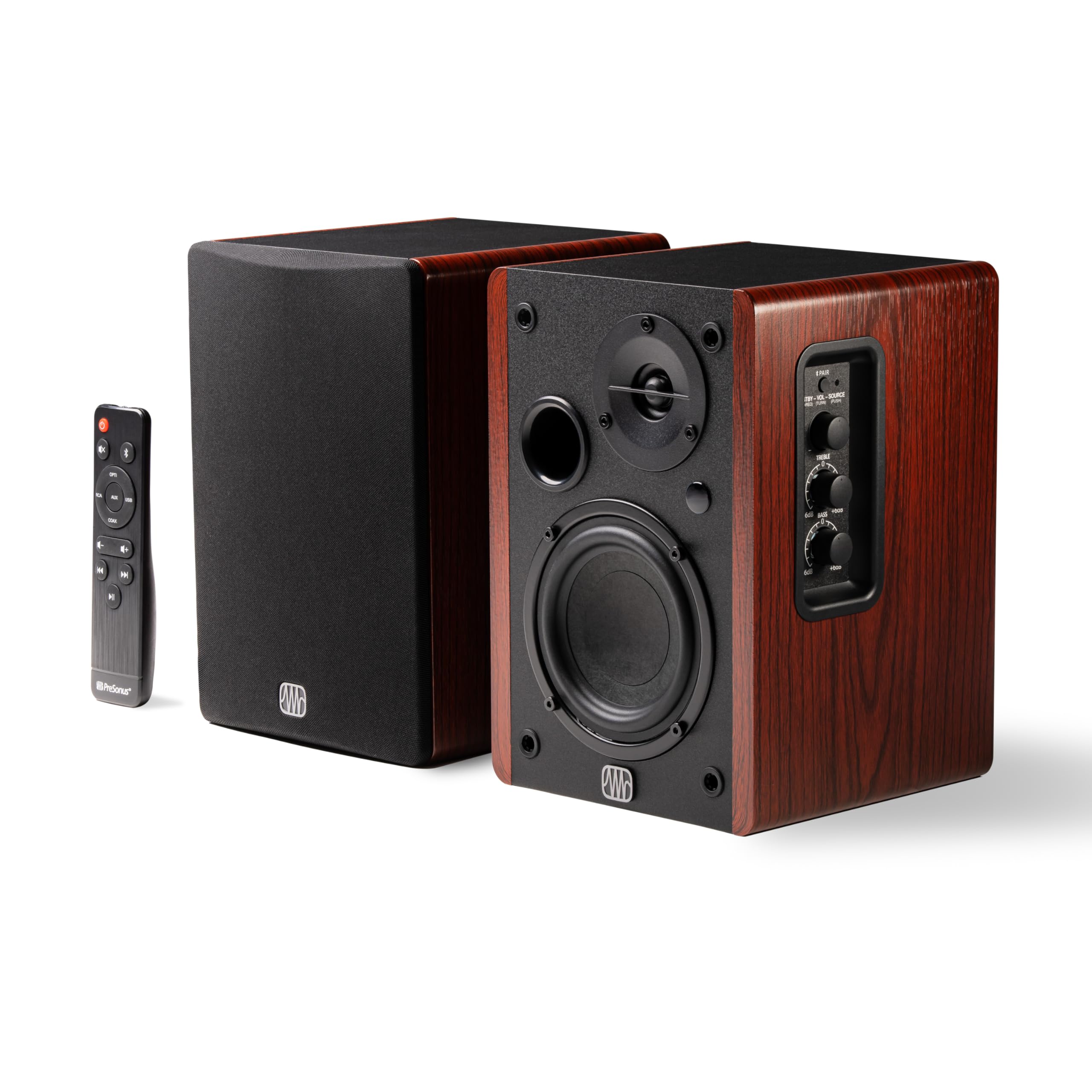
PreSonus Eris Accent BT

87 /100
Sound Score Excellent

Key details

Inputs
USB-C, RCA, optical
Bluetooth Codec
SBC
Power & Drivers
4-in woofer, 13mm tweeter, 60W
Wi-Fi Ecosystem
No
View on Amazon

The Eris Accent BT delivers flat, clean studio-monitor sound with a wide soundstage for a modest outlay. Its input panel—USB-C, optical, coaxial, RCA, and a sub-out—covers more sources than comparably priced bookshelf pairs.

The larger caveat is output: 60W serves desktop near-field listening, but it cannot match the headroom of the Edifier alternatives in a large living room. That places it as a desktop tool rather than a room-filling living-room speaker.

Pros

  • Flat, clean, wide-stage studio sound with realistic vocals
  • Input flexibility at this price: USB-C, optical, coaxial, RCA, and sub-out
  • Budget-friendly route to studio-monitor tuning at desktop volumes

Cons

  • In bass-heavy genres, the 55Hz low end stays light until the sub-out is used
  • Listeners after a warm, forgiving consumer sound will find the flat voicing dry on compressed pop
Our verdict

With USB-C, optical, coaxial, RCA, and sub-out on a desk-friendly budget pair, this fits desktop creatives who want flat response for close listening.

Check Latest Price

How to Choose

Bluetooth Codec and Reliability

aptX HD carries more audio data than standard SBC, which can preserve treble detail and dynamics during wireless listening. That advantage only matters if the Bluetooth link stays stable.

Models with a wired fallback, whether optical, RCA, or USB, keep the system usable when wireless pairing gets unreliable. In a fixed home setup, the cable is often the quiet upgrade that matters more than the codec.

Input Versatility

Optical, coaxial, RCA, USB, and phono inputs determine how many sources a speaker can serve. A turntable needs phono or line level, a TV wants optical, a computer may want USB, and a DAC often prefers coaxial.

Every wired input removes one wireless handshake from the chain. That matters because source switching and pairing resets are the most common frustrations with powered speakers; physical inputs bypass them entirely.

Subwoofer Output

A subwoofer output turns a bookshelf pair into the foundation of a system. Without it, deep-bass limits can force a full speaker upgrade instead of a simple sub addition.

If you listen near-field in a small room, built-in bass may be enough. If you fill a living room or watch movies, look for a sub-out before buying; adding a powered sub later is far cheaper than replacing the whole pair.

Driver Size and Amplifier Power

A larger woofer moves more air, which translates to cleaner bass at higher volume. A tweeter that can handle high output without strain keeps treble composed when you push the system.

Amplifier power should match the room, not the spec sheet. Forty Watts can satisfy a desktop setup, while 120 Watts or more is the realistic range for medium-room listening; the same driver in a big room will sound compressed even with a high-quality amp.

Wi-Fi and App Ecosystem

Wi-Fi platforms add multiroom, AirPlay, and voice control, but they also add setup pressure. The speaker becomes tied to an app's stability and update schedule.

If you want to stream without touching a phone, Wi-Fi is the right tool. If you want a speaker that works the same in five years with any source, a wired Bluetooth model is the safer choice.

Frequently Asked Questions