12 Best Streaming Mixer of 2026: Pick by Stable USB Routing

The best streaming mixer for your setup depends on OS support, preamp count, and USB routing stability — not the features on the box.

Most streaming mixers look alike on paper: XLR input, USB output, a row of faders. The difference that decides whether a mixer becomes a permanent desk anchor or a return is how stable the software holds the connection when you're live.

That trade-off runs through every price tier. A console with more mic inputs, sound pads and processing is genuinely more capable, but it also has more firmware to update, more routing paths to configure, and often a narrower OS list. Match the feature count to the workflow you actually have, not the one you imagine.

The practical result: pick the machine whose software matches your computer and whose channel count matches your co-hosts. Everything else — effects, samplers, remote app — is secondary if the audio drops on air.

About the Sound Score: This comparative score is calculated from a product's published customer rating and review volume. It is not a laboratory measurement or a hands-on test result.

1

Best Stream Console

TC Helicon GoXLR

93 /100
Sound Score Outstanding

Key details

Channels
4 channels
OS Support
Windows only
Mic Preamps
MIDAS, 1 XLR
Stream Extras
Sampler, voice FX, sound board
View on Amazon

The GoXLR pairs motorized faders for mic, game, music and chat with voice FX, a sampler and a sound board in one desk unit. The faders themselves are the point: they give a streamer physical control over separate audio sources without alt-tabbing into a software mixer, and they show the current mix at a glance. That desk consolidation is what separates it from a plain USB audio interface or a traditional analog mixer, and the full-size layout keeps each source on its own fader.

The onboard MIDAS preamp delivers 48V phantom power, and the control layout has a short learning curve; a first-time user can be comfortable within a session or two. Assigning voice effects and sampler triggers to the onboard pads keeps the usual stream sounds at hand. The app handles deeper customization, so the hardware surface stays clean during live use.

This is for Windows creators who want all-in-one streamer features and accept an app-driven workflow. The GoXLR is Windows-only, routing depends on the GoXLR app, and occasional software or driver instability can interrupt a live stream. Mac users and podcasters needing more than one XLR input need a different console; the four faders are source routes, not four microphone inputs.

💡 Set up sampler and voice FX assignments in the app before going live, then run the stream from the hardware pads.

Pros

  • A single desk unit replaces separate mic processors, samplers and sound-pad controllers.
  • New users can get comfortable quickly after a short initial learning curve.
  • Routing, sampler, voice FX and customization cover a deep streamer feature set.

Cons

  • Audio output can stutter or skip on some systems.
  • The GoXLR app can disconnect or lose the sampler during a live stream.
Our verdict

For Windows streamers who want dedicated faders over separate audio sources, this is the mixer to build a streaming setup around.

Check Latest Price
2

Best for Multi-Mic Podcasts

Rode RØDECaster Pro II

87 /100
Sound Score Excellent

Key details

Channels
4 mic inputs
OS Support
Mac, Windows
Mic Preamps
Revolution, 4 XLR
Stream Extras
SMART pads, APHEX
View on Amazon

Four combo XLR inputs, dual USB, Bluetooth, 64 SMART pad actions, and APHEX processing make this the multi-mic production console in the set. The workflow suits teams: each host gets a dedicated preamp with strong gain for dynamic mics, while pads fire sound effects or utility commands across eight banks. Compared with the two-input console here, this one earns its larger footprint when guest lists exceed two.

It is a premium-priced option for podcasters and stream teams recording three or four live mics, though a unit may not boot, may lose USB connection, or may ship with a faulty power supply. A forgiving retailer covers that risk; after setup, the console runs predictably.

💡 Treat Wi-Fi pairing and firmware updates as a settle-in task before a live stream; the console works without issue once the connection is established.

Pros

  • Solid metal chassis and heavy-duty controls make it a permanent home-studio centerpiece.
  • Quiet, clean preamps with high gain handle dynamic broadcast mics without added noise.
  • 64 SMART pad actions, multitrack recording, and flexible routing let a team run the show from one surface.

Cons

  • Wi-Fi pairing and firmware updates may require a few attempts before they stick.
  • A unit may not boot, lose USB connection, or ship with a faulty power supply.
Our verdict

The multi-mic production console for teams that need four XLR inputs and deep pad control; solo and duo setups will find better value in the smaller option here.

Check Latest Price
3

Best Compact GoXLR

TC Helicon GoXLR Mini

91 /100
Sound Score Outstanding

Key details

Channels
1 XLR
OS Support
Windows only
Mic Preamps
MIDAS, 1 XLR
Stream Extras
Voice FX, EQ, compression
View on Amazon

The GoXLR Mini puts the MIDAS preamp and GoXLR voice-FX workflow into a smaller, lower-priced body than the full-size console. The hardware layout stays stream-friendly: sliders and mute buttons sit under the hand, and sound quality with an XLR mic is a clear step up from onboard audio. Setup on a Windows PC is quick enough for a first stream.

For a solo Windows streamer, the draw is the GoXLR workflow: the app handles routing and voice FX the same way as the bigger unit. Mac and Linux are not supported, the app has to remain open for those settings to apply, and the single XLR input makes this a poor fit for dual-mic podcasts.

💡 Disable USB power-saving on the port that feeds the GoXLR Mini before a long stream.

Pros

  • Same MIDAS preamp and GoXLR voice-FX chain as the full-size console in a smaller package.
  • Slider and mute-button layout keeps your audio mix within reach.
  • Quick setup on Windows gets a solo stream running with minimal fuss.

Cons

  • Static or USB dropouts can interrupt a live stream in some PC environments.
Our verdict

A focused compact entry into GoXLR's streaming workflow, with the MIDAS preamp and voice FX intact.

Check Latest Price
4

Best Digital Mixer for Musicians

Behringer FLOW 8

92 /100
Sound Score Outstanding

Key details

Channels
8 inputs
OS Support
Mac, Windows
Mic Preamps
MIDAS, 2 XLR
Stream Extras
No sound pads
View on Amazon

An eight-input digital mixer with two Midas preamps, Bluetooth app control, and a USB audio interface, the FLOW 8 keeps EQ and effects adjustments within reach from a phone or tablet. Its low-noise output and built-in effects make it a practical companion for musicians, small venues, and hybrid events.

This is not a streamer’s sound-pad console: no sound pads, voice FX, or game/chat routing are included, and Bluetooth pairing can be finicky with one device at a time. Buyers who want app-controlled mixing for band practice or hybrid events will find the FLOW 8 a cost-effective fit; streamers chasing macros and voice effects should look at the top pick instead.

Pros

  • Sturdy, low-noise digital mixer handles regular gig or practice use.
  • Built-in effects deliver professional results for live and hybrid sets.
  • Bluetooth app control puts EQ and effects tweaks on a phone or tablet.

Cons

  • Two XLR preamps cap multi-mic podcast or panel setups.
Our verdict

The FLOW 8 is a cost-effective digital mixer for live bands, small venues, and hybrid events that need app-controlled EQ and effects.

Check Latest Price
5

Best Analog Workhorse

Yamaha MG10XU

92 /100
Sound Score Outstanding

Key details

Channels
10 inputs
OS Support
Mac, Windows
Mic Preamps
D-PRE, 4 XLR
Stream Extras
SPX effects only
View on Amazon

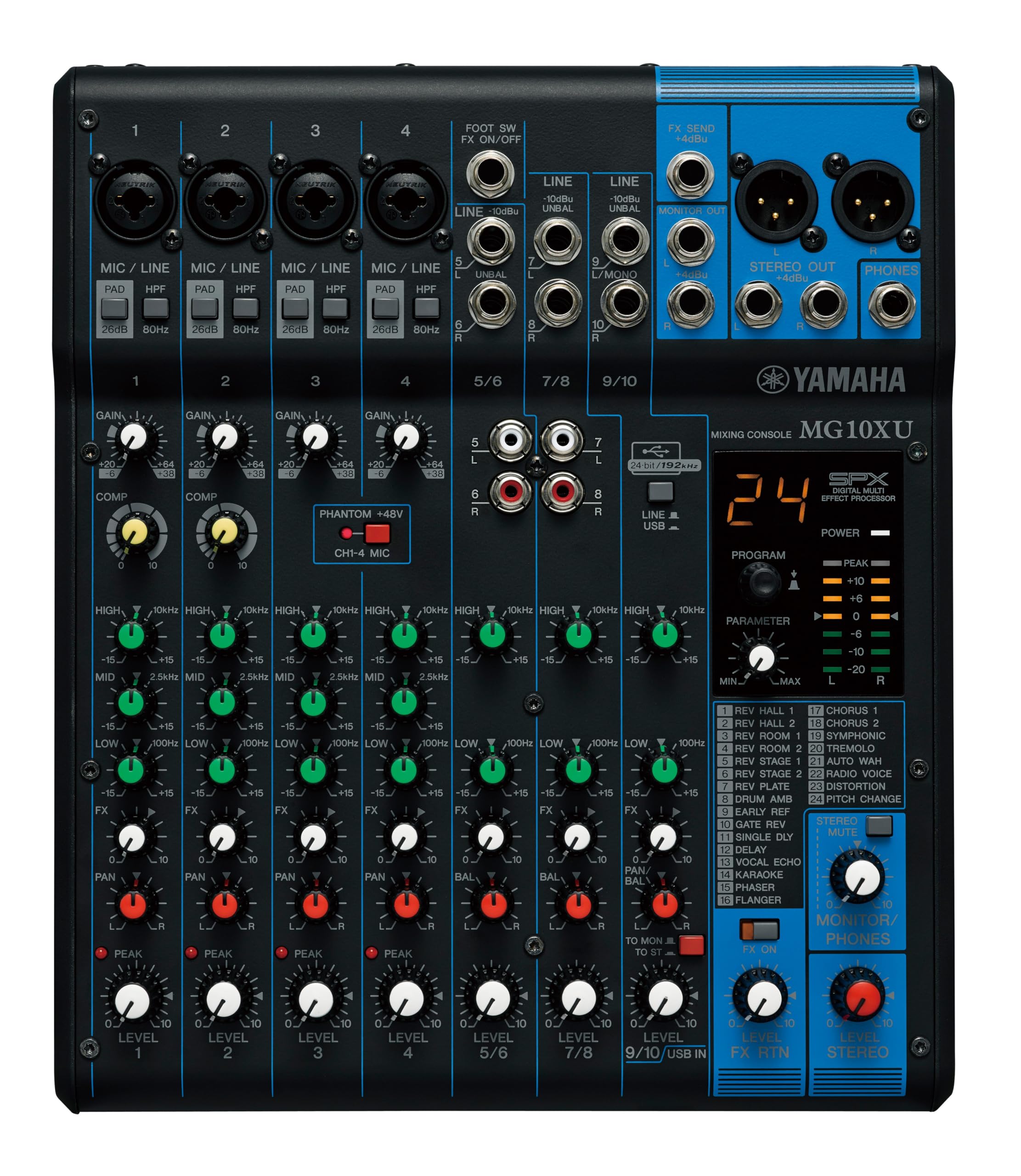
The MG10XU combines ten input channels, class-A D-PRE preamps, 1-knob compressors, and SPX effects in a conventional analog board that behaves predictably in a band or podcast setup. Aux sends, a stereo bus, and a USB interface for recording make it useful beyond just plugging in mics. This is the right mixer for musicians, small bands, and podcasters who want physical EQ/compressor knobs, 48V phantom power, and plenty of XLR inputs without learning a software mixer. Stream-specific extras like sound pads, voice FX, and chat/game routing are absent, so creators who need those should look toward the top pick's workflow instead.

Pros

  • Solid construction stands up to repeated setup and transport.
  • Class-A D-PRE preamps keep mic and instrument signals clean and clear.
  • Ten input channels cover multiple mics, line sources, and stereo returns.

Cons

  • For USB recording, the output may run quiet or go unrecognized on some computers.
Our verdict

Traditional analog mixing at a fair price — best for bands, schools, and podcasters who want a physical board with room to grow.

Check Latest Price
6

Best Budget Streamer Starter

FIFINE SC3

89 /100
Sound Score Excellent

Key details

Channels
4 faders
OS Support
Mic Preamps
1 XLR, 48V
Stream Extras
Voice changer, sound pads
View on Amazon

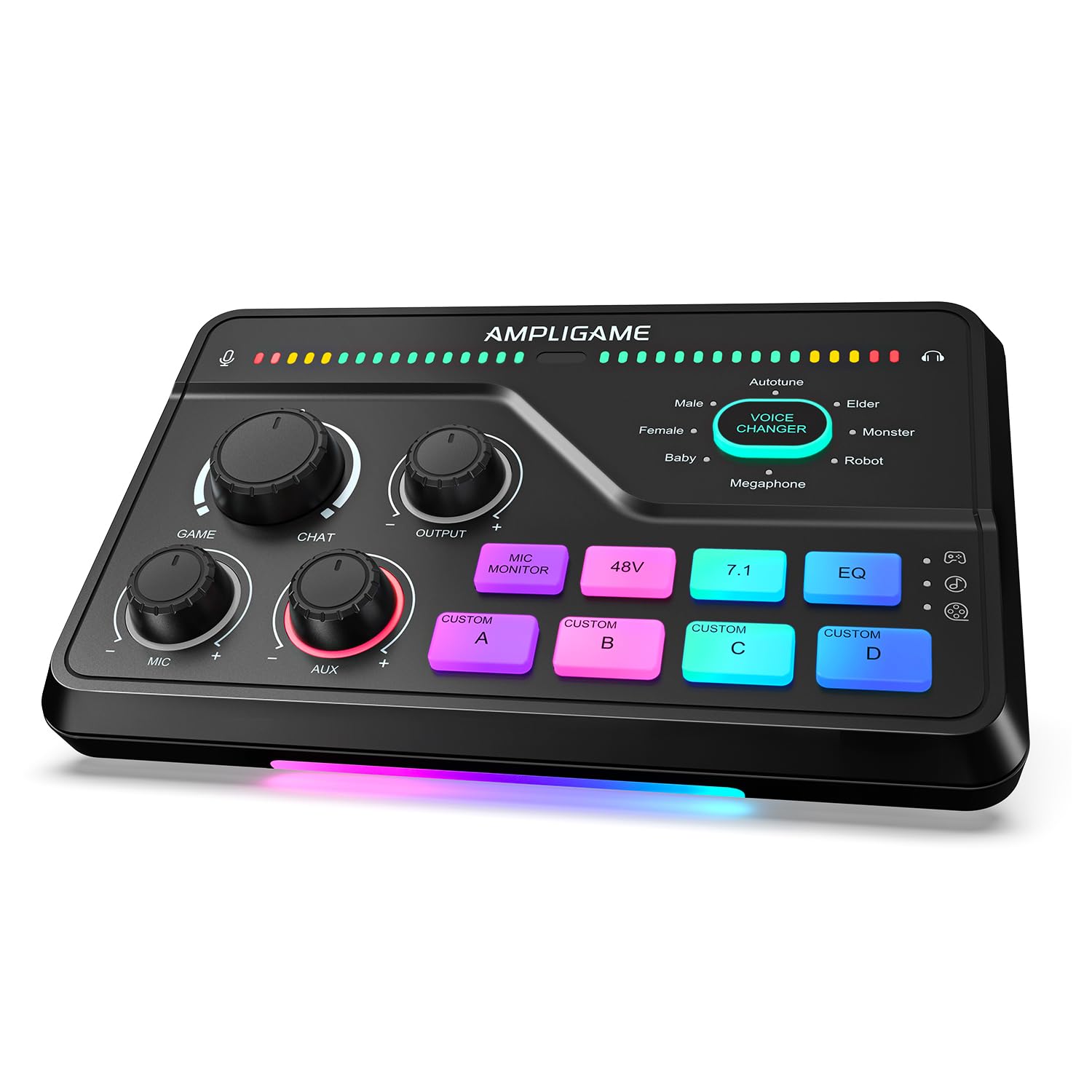
The SC3 brings four faders, RGB, voice changer and four sound pads into a low-priced USB-C console, giving first-time streamers a tactile mixer without a steep learning curve. The physical faders and mute buttons keep mic, game and music levels within easy reach during a live stream, and plug-and-play setup avoids a software hurdle.

This is for budget-conscious solo streamers who want voice FX and a hands-on mixing surface, not multi-mic podcasters. Noise floor and limited preamp gain are noticeable with quieter dynamic mics; pairing it with a louder mic or an inline boost gets around that. At this price, the feature set is the draw, not broadcast-grade capture.

Pros

  • Four faders and mute buttons give live control over the mix without stopping the game.
  • Voice changer and four sound pads add stream-friendly fun at a budget price.
  • USB-C plug-and-play setup gets new streamers running quickly.

Cons

  • Pushing input gain too far can introduce distortion.
Our verdict

The SC3 is the entry-level way to get faders, voice FX and sound pads on your stream without a studio-grade investment.

Check Latest Price
7

Best Compact Pro Podcasting

Rode RØDECaster Duo

85 /100
Sound Score Excellent

Key details

Channels
2 XLR
OS Support
Mac, Windows
Mic Preamps
Revolution, 2 XLR
Stream Extras
SMART pads, APHEX
View on Amazon

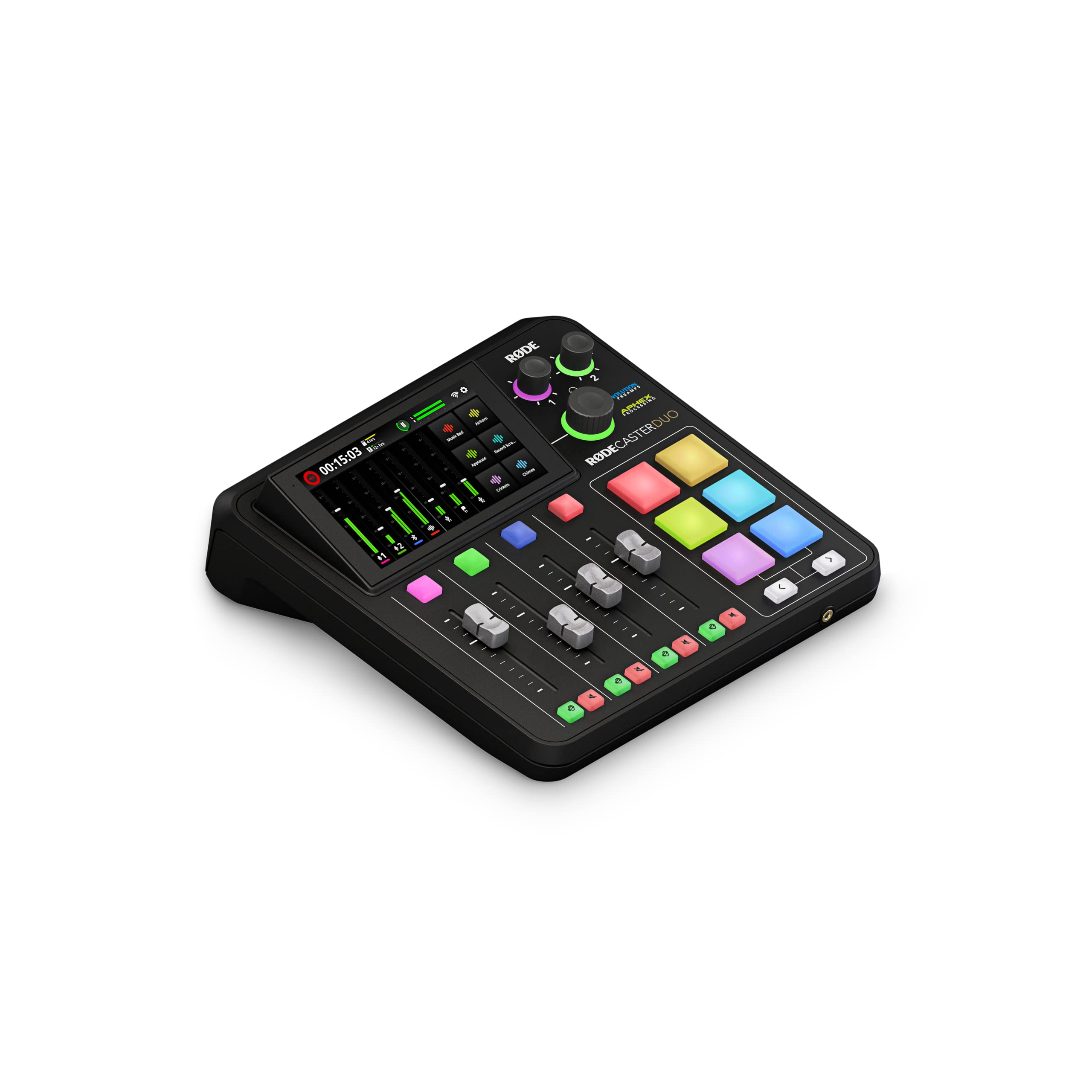
The RØDECaster Duo packs two Revolution preamps with 76dB of gain, APHEX processing, and six SMART pads into a compact console built for a duo podcast desk. The chassis feels premium, and the processing adds polished broadcast tone without outboard gear.

This fits creators already in the Rode ecosystem who want the full-size console's sound without the four-mic footprint. Beginners face a steeper setup curve, and boot behavior can be uneven, so a lenient return policy is worth having. Two XLR inputs keep the focus on duo sessions.

Pros

  • Premium chassis and controls give the Duo a solid, broadcast-grade feel for podcast setups.
  • APHEX Aural Exciter and Big Bottom plus six SMART pads bring polished voice processing to a compact unit.

Cons

  • Routing and software setup can be complicated for first-time users.
  • Some units may not boot, get stuck on loading, or stop turning on when powered up.
Our verdict

Duo podcasters already in Rode's ecosystem get the compact pro console they want; run a test boot and route check before the first show.

Check Latest Price
8

Simple Streaming

Behringer XENYX 802S

87 /100
Sound Score Excellent

Key details

Channels
8 inputs
OS Support
Mic Preamps
2 XLR, 48V
Stream Extras
None
View on Amazon

The XENYX 802S is a compact eight-input analog mixer with two XLR preamps, phantom power, and stereo USB output for mixing a couple of mics with PC audio. It suits budget podcast and stream setups that want hands-on controls. This board omits sound pads, voice FX, and app routing, so it sits below streamer-focused consoles.

Pros

  • Compact footprint fits a small desk without dominating.
  • Good sound quality for two-mic podcast and stream mixes at a budget price.

Cons

  • USB cable is not included, so have a spare on hand.
Our verdict

Budget podcasters and school classrooms with two mics and one PC are the right fit.

Check Latest Price
9

FPS Gamers

FIFINE SC8

85 /100
Sound Score Excellent

Key details

Channels
3-way mix
OS Support
Windows, iPhone
Mic Preamps
1 XLR, 48V
Stream Extras
Voice changer, sound buttons
View on Amazon

The SC8's physical game/chat balance and 7.1 surround are the core draw, and the optical input plus four sound buttons make it easy to tune console and PC sessions. Mac owners should plan around PC or console use; OS support is narrower than on rival stream consoles.

Pros

  • Physical game/chat balance plus 7.1 surround keeps FPS positional audio clear without alt-tabbing.
  • Plug-and-play on Windows and iPhone gets a stream running with minimal setup.

Cons

  • Only one XLR input limits podcasters who need two mics.
Our verdict

Solo PC/console FPS streamers get the relevant tools in one box: a physical mix knob, headphone surround, and four sound buttons.

Check Latest Price
10

Live Creators

MAONO G1 Neo

86 /100
Sound Score Excellent

Key details

Channels
4 channels
OS Support
PC, phone, PS4/PS5
Mic Preamps
1 XLR, 48V
Stream Extras
Sound pads, voice changer
View on Amazon

The G1 Neo is an ultra-budget console-compatible mixer that packs a voice changer, four sound pads, Bluetooth, and 48V phantom power into a plug-and-play unit for solo creators. It holds back from higher placement because the single XLR input rules out co-host podcasts and multi-mic setups.

Pros

  • Voice changer and four sound pads add effect-driven interaction to streams without extra software.
  • Bluetooth, USB-C, and AUX support PC, phone, and console setups for mobile creators.

Cons

  • Static or reverb artifacts can surface depending on input and power setup.
Our verdict

For solo streamers who want voice changer and sound pads on a tight budget, the G1 Neo is a cost-effective pick; don't plan for a second mic.

Check Latest Price
11

Dual-Mic Podcasts

MAONO E2 Gen2

84 /100
Sound Score Excellent

Key details

Channels
2 XLR
OS Support
Mic Preamps
2 XLR, 60dB
Stream Extras
8 sound pads
View on Amazon

Two XLR inputs, eight sound pads, Bluetooth, loopback and a built-in battery make this a strong co-host podcast console at a mid-range price. Setup is simple and preamps stay clean. Stored sound-pad samples can be lost, which keeps it below Røde's pro consoles despite solid dual-mic value.

Pros

  • Two XLR inputs and eight sound pads pack co-host podcasting and stream effects into one compact console.
  • Bluetooth, USB-C, loopback and a built-in battery cover portable phone, computer and game audio.

Cons

  • Headphone monitoring can echo in some setups, with limited monitor volume control.
Our verdict

Fits two-host podcasters and streamers who want dual XLR, sound pads and battery portability without paying pro-console prices.

Check Latest Price
12

Analog Mixing

Riworal 6-Channel

84 /100
Sound Score Excellent

Key details

Channels
6 channels
OS Support
Mic Preamps
4 XLR, 48V
Stream Extras
16 DSP effects
View on Amazon

Four combo XLR inputs, Bluetooth, 16 DSP effects and 48V phantom power make this a practical analog mixer for karaoke or small live shows. The USB port is for flash-drive playback, not PC audio routing, so streamers needing computer mixing will hit a boundary. Headphone monitoring can sound muffled or choppy, and power delivery can vary between units.

Pros

  • Four combo XLR inputs, Bluetooth, and 48V phantom provide a budget-friendly analog feature set.
  • Bluetooth pairing is quick and convenient for playing music from a phone between sets.

Cons

  • Headphone monitoring can sound muffled or choppy, which matters for quiet listening sessions.
Our verdict

Fits karaoke and small live setups where multiple analog inputs matter more than PC audio routing.

Check Latest Price

How to Choose

Mic Preamps and XLR Count

Mic preamp gain determines how much clean level a dynamic mic delivers before hiss becomes audible. Budget mixers often list 48V phantom power, but that only matters for condenser mics; quiet dynamics like the Shure SM7B need high gain and low noise floor.

One XLR input suits a solo streamer with a single microphone. Add a second host and that same unit forces you into external mixers or USB daisy-chains, so choose the input count for the maximum number of live mics you expect.

USB Connectivity and Routing

USB routing is the bridge between your console and your stream. Some mixers present as a single stereo device, which makes game and chat separation impossible without software; others expose separate channels for microphone, game, music and chat so you can adjust levels from the desk.

Do not assume USB output means full routing. A mixer can stream stereo audio over USB while still blending everything through one bus, leaving you with no way to duck game audio independently.

Stream Extras

Sound pads, voice FX and samplers are the features that make a streaming mixer feel like a production tool rather than a PA mixer. They are also the first place firmware bugs appear, so buy extras from a platform with a record of software updates, not just a long spec list.

Before paying for 64 pads, ask whether your stream actually uses pre-recorded drops and live effects. A simple console with stable routing beats a loaded one that stutters during a live show.

Channels and Simultaneous Mics

Channel count on the faceplate does not equal the number of live mics you can run. A 10-channel mixer may have only four XLR microphone inputs, with remaining channels reserved for line-level instruments and playback devices.

Count the XLR inputs for your hosts first, then look at total channels for game audio, music, and call-ins. That gap between 10 channels and two mics is where buyer regret starts.

Operating System Support

Several dedicated streaming consoles are Windows-only, and the companion app is the only way to adjust routing and recalls. Mac users need to check for class-compliant USB or explicit macOS support before buying, because firmware updates are often tied to the Windows app.

On Windows, power management and USB hubs are the usual sources of dropouts. Plug the mixer directly into the motherboard, disable USB selective suspend, and keep the companion app current.

Frequently Asked Questions