Best Overall
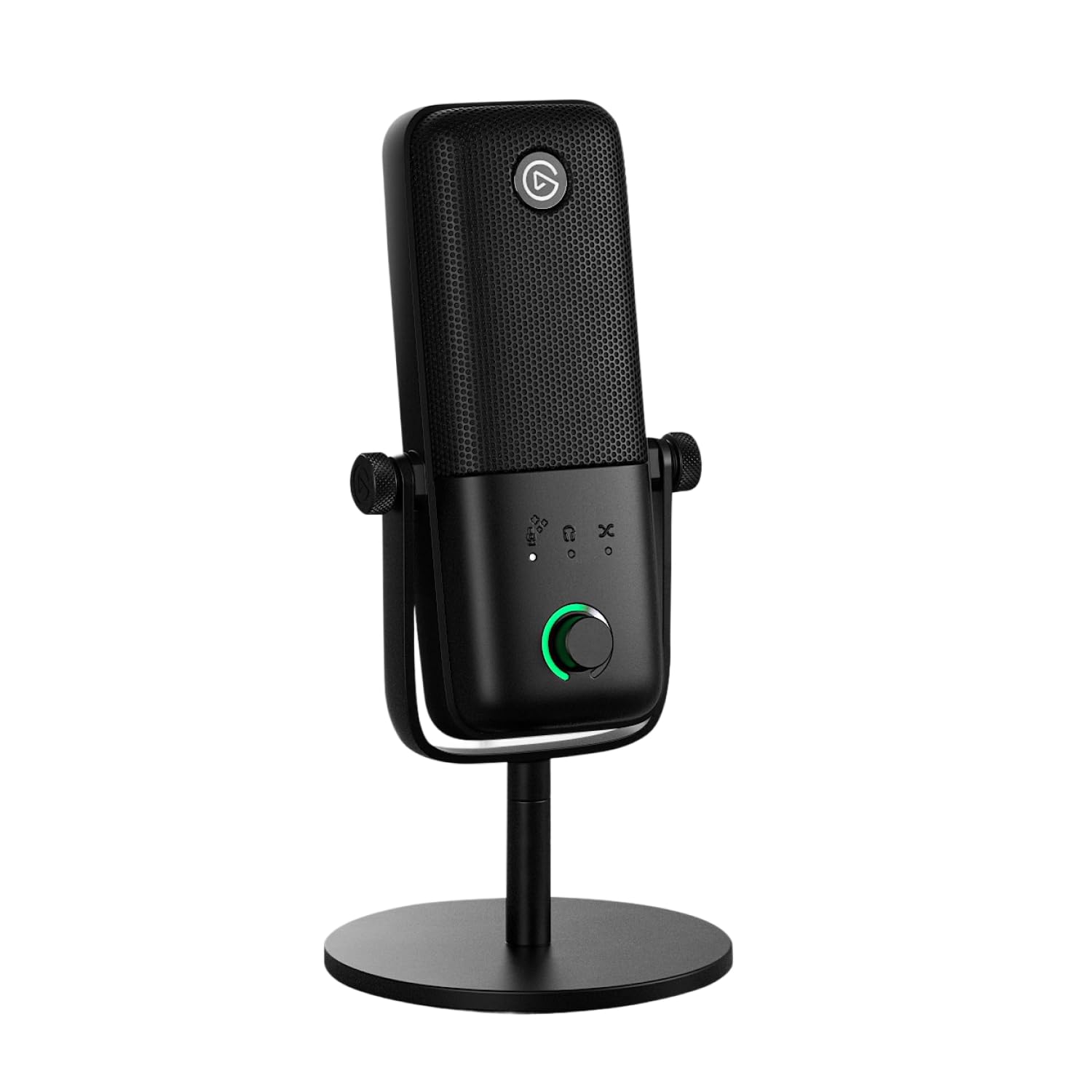
Elgato Wave:3 MK.2
Key details
- XLR Option
- No XLR
- Capsule Type
- Condenser
- Connectivity
- Native USB-C
- On-Board Controls
- Gain, mute, headphone volume
The Wave:3 MK.2 captures voice with a rich, full tone that sits close to an XLR studio mic. Clipguard 2.0 catches sudden shouts without distortion, and Wave Link adds EQ, compression, voice enhancement, and per-app routing for OBS/Twitch. Native USB-C makes setup plug-and-play; the physical controls work before the software is even installed. A 3.5mm headphone jack provides zero-latency monitoring, so you can hear yourself clearly while game audio or a podcast feed plays alongside. The Wave Link app is where the mic's real power lives: separate channels for voice, music, alerts, and system sounds can be mixed and sent to different outputs without extra hardware. Clipguard 2.0 acts as a safety net without coloring normal speech, which is useful for live streams where volume can spike.
This is for USB-only streamers and podcasters who want broadcast polish without an interface. A cardioid condenser still lets room noise through, so it prefers a quiet or treated space over an untreated game room. For a noisy room, a dynamic USB/XLR hybrid will reject more keyboard and fan noise; this mic is not that tool.
Pros
- Rich vocal capture with enough body that your podcast or stream audio needs no extra processing.
- Wave Link routes per-app audio and adds EQ, compression, voice enhancement, and VST support in one window.
- Plug-and-play USB-C setup with physical controls that work before the software is opened.
Cons
- There's no XLR/analog output, so an interface-based upgrade path doesn't exist for this mic.
- Some units can develop intermittent audio cutouts after months of use, so warranty terms are worth checking before buying.
The Wave:3 MK.2 is the USB-C mic for creators who want broadcast tone and full software mixing without moving to XLR. Keep it in a quiet space and it delivers a package you'd otherwise need an interface to match.